Sunday, July 21, 2013

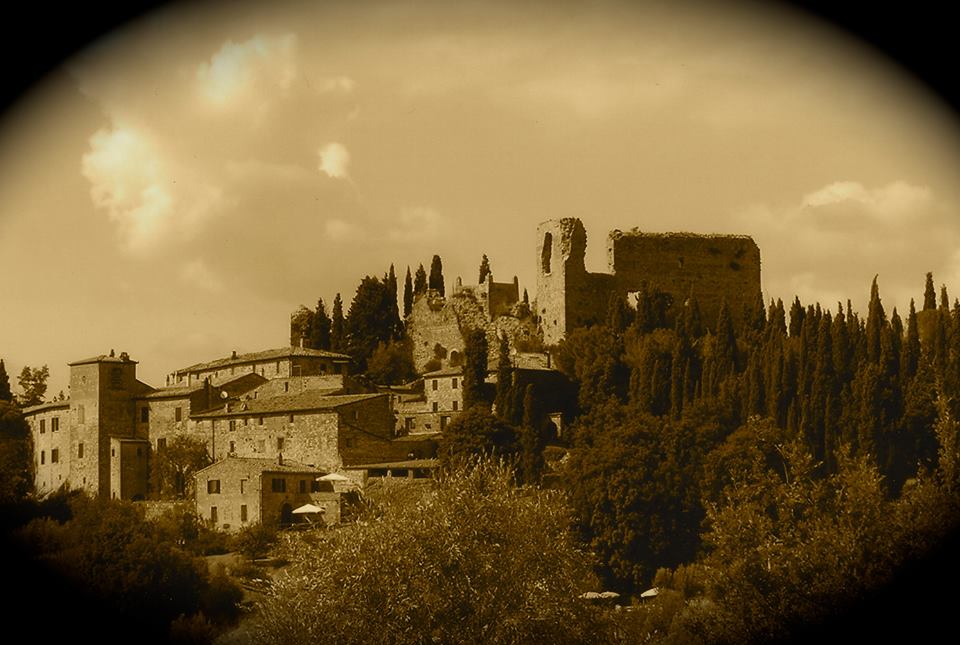
Under the Tuscan spell....Love, War & Murder in Tuscany

After 9/11 and the onset of the war on terror, it became clear that we might be in a permanent state of war. What we forgot, was that war does not exist in a vacuum. It brings out the best and worst within us. It forces us to face a moral paradox that we might not have to face, in times of peace.

This was certainly true in WWII. These are some of the elements that provide the backdrop for Chris Bohjalian’s new novel The Light in the Ruins

It is a love story and thriller set in Florence and Tuscany in the waning days of World War II, as well as in the 1950s. But in many ways, it’s also a cautionary tale about the compromises we make during war.

My recent conversation with Chris Bohjalian:


Here is my conversation with Chris, from a year ago, about The Sandcastle Girls


Thursday, July 18, 2013

Animals and Humanity

One of the great values of art is that it gives us a unique window on the world. It forces us to be present and in the moment and allows us to channel our own feelings and thoughts into the work of another.

In many ways animals, particularly our companion animals. do the same thing. Perhaps it's why so many of us have them, why we spend so much on them. It’s also why we often introduce young children to animals at the zoo. For those young minds, it’s often their first connection to and understanding of a world beyond themselves.

Veterinarian Dr. Vint Virga has set as his mission, to give all of us greater awareness and sensitivity towards our companion animals and use them to better understand ourselves and to enrich our appreciation of life. He explains it The Soul of All Living Creatures: What Animals Can Teach Us About Being Human.

My conversation with Dr. Vint Virga:


Bookmark and Share


How a Plastic Brick, Conquered the Global Toy Industry

If I asked you to look at a viciously competitive company, in a market where the tastes change rapidly, where you have to redesign your product every year or two and where you were dominating the market because of your ability to innovate; where there was a cult like devotion to your product, yet it once faced bankruptcy until one of the most successful transitions in business history... most of you would immediately think of Apple.

Well that’s true. But it’s also true of LEGO. Yes that humble plastic brick has within it a story that is both a metaphor for and cautionary tale about innovation in the world of business and technology.

David Robertson, a former McKinsey consultant and now Professor at the Wharton School, provides a detailed case study of LEGO in Brick by Brick: How LEGO Rewrote the Rules of Innovation and Conquered the Global Toy Industry.

My conversation with David Robertson:


Bookmark and Share


Tuesday, July 16, 2013

Six College Kids and a Billion-Dollar Empire that Came Crashing Down

Some college kids start whole business out of their dorm rooms. Think Mark Zuckerberg and Michael Dell. Some other students, at the University of Montana, started a business that would be raided by the US Department of Justice and would lead one of its founders to be a fugitive in Antigua, with millions of dollars

It’s only fitting that Ben Mezrich, the man who told Mark Zuckerberg’s story, in The Accidental Billionaires, would now tell this story in Straight Flush: The True Story of Six College Friends Who Dealt Their Way to a Billion-Dollar Online Poker Empire--and How It All Came Crashing Down . . .

My conversation with Ben Mezrich:


Bookmark and Share

Sunday, July 14, 2013

A father, two sons and a murder set up by Charles Harrelson

As with the family of Trayvon Martin, sometimes a verdict is even more devastating than the crime. This is what happened to the family of noted trial lawyer David Berg, after his brother Alan was killed in cold blood, in a hit set up by actor Woody Harrelson’s father.

Like two diverging paths in the woods, the lives of family members often go off in very different directions. For some the road taken leads to success and the good life, for others that road leads to a very different kind of life. This is the recurring irony of all sides of this story

This is the story of David and Alan Berg, as told by David in his memoir Run, Brother, Run: A Memoir of a Murder in My Family.   One brother would become one of our nation's most respected trial lawyers, the other murdered at a young age, by a notorious hit man, hired by Charles Harrelson.

My conversation with David Berg:


Bookmark and Share

Saturday, July 13, 2013

Finding Happiness Singing with Others

Most of us remember the joyful song about teaching the world to sing, in perfect harmony. It was later used as an incredibly popular Coke commercial. Some of you may have seen the contestant on American idol with a serious stutter, that disappeared when he sang.

Both are testaments to the power of song and of singing with others. In fact, over 40 million Americans participate in some kind of group singing. But why? What's the appeal and what’s the impact?

Bestselling author ;and commentator Stacy Horn takes a look at his in Imperfect Harmony: Finding Happiness Singing with Others

My conversation with Stacy Horn:


Bookmark and Share

Friday, July 12, 2013

Out of many....One

Day after day we see further evidence of what appears to be America's economic decline.  European economies seem mired in a kind of economic quicksand. But suppose instead of seeking individual isolationist solutions, that the U.S. and Europe could create a kind of transatlantic economic union?

Clausewitz said that diplomacy was simply war by other means. Today it might be fair to say the same of international trade. As both America and Europe asses their roles in the 21st century, it's important that we access every aspect of of power, including as both a marketplace for and a purveyor of goods.

Imagine if at America s birth, the 13 colonies had decided to go it alone. For all the criticism of the EU and NAFTA today, arguably the world is a better place because of them.

These are a few of the ideas that spring from Richard Rosecrance in The Resurgence of the West: How a Transatlantic Union Can Prevent War and Restore the United States and Europe.

Richard Rosecrance is senior fellow, adjunct professor, and director of the U.S.-China Relations Project at the Belfer Center for Science and International Affairs at the John F. Kennedy School of Government. He is also Distinguished Research Professor, UCLA, where he was the former director of the Burkle Center for International Relations.

My conversation with Richard Rosecrance


Bookmark and Share

Thursday, July 11, 2013

Roosevelt and Five Extraordinary Men Who Took America to War

As we once again debate America's role in the world, this time in the Middle East, it’s worth noting that there is most assuredly a deep strain of isolationism that courses throughout American history. Perhaps nowhere was this more apparent than in the run up to the Second World War.

Even as Hitler invaded Poland in 1939, only one in forty Americans thought America should get involved. This was the world that FDR faced as he tried to reshape America's vision and it’s place in the world.  He reminded the country that it had a “rendezvous with destiny.”

He would succeed in persuading America.  How he did it, is the the subject of Rendezvous with Destiny: How Franklin D. Roosevelt and Five Extraordinary Men Took America into the War and into the World by Michael Fullilove.

My conversation with Michael Fullilove:


Bookmark and Share

Tuesday, July 9, 2013

Revolutionary Conservatives

Imagine a nation at war, a financial crisis, congress divided, bitter partisanship, battles over taxation and the role of banks and corporations. Members of government who believed in trickle down economics and who thought that business interests should be preeminent and that we had to show America’s strength. You’d think we were talking about America today. In fact it was also the America of its birth. A time when the quest for independence ran headlong into political reality.

This is the reality that David Lefer takes us into in  The Founding Conservatives: How a Group of Unsung Heroes Saved the American Revolution.

My conversation with David Lefer:


Bookmark and Share


Sunday, July 7, 2013

Jeannette Walls

Seven years ago Jeannette Walls reminded us of the resiliency and precociousness of youth, as she took us through her own troubled upbringing in THE GLASS CASTLE. Now she turns to fiction and is able to share with us and show us once again how young people can make their way in the world; but more importantly, the raw innocence with which they view their surroundings. In The Silver Star we get to see how these raw edges get knocked off and how, for better or worse,  fully formed adults emerge.

My conversation with Jeannette Walls:


Bookmark and Share


Saturday, July 6, 2013

There really was a golden age of hijacking...

It’s hard to imagine today, but there was a golden age of hijacking.  Over a five-year period, starting in 1968, commercial jets we hijacked nearly once a week, using guns, bombs, and jars of acid. Some hijackers wished to escape to Cuba, or Saigon.  Many, imagined being hailed as heroes; others aimed to swap hostages for sacks of cash. Their exploits mesmerized the country.

But perhaps the the story that captures the nation's attention on many levels was the the young lovers at the heart of Brendan I. Koerner’s story of this period told in his his book The Skies Belong to Us: Love and Terror in the Golden Age of Hijacking.

My conversation with Brendan Koerner:


Bookmark and Share

Tuesday, July 2, 2013

A cancer on the Church..that didn't have to happen

Just recently we heard about tens of millions of dollars in cash being laundered in the Vatican. Clearly the Vatican and the Catholic Church are still imperial institutions, very much disconnected from the real world. Nowhere has this been more evident than in the almost twenty year history of sex abuse in the Catholic Church.

We often think about these stories on a very human, very tragic case by case basis. But from thirty thousand feet, the numbers are staggering. 500+ priests sent to prison, over 3 billion paid in settlements, single priests that have abused more than 200 individual children and these are just a few of the statistics.

How did this happen? How did horror and human degradation become so institutionalized, covered up and almost accepted from the Pope on down?

This is the story that Pulitzer Prize winning reporter Michael D’Antonio tells in his new book Mortal Sins: Sex, Crime, and the Era of Catholic Scandal.

My conversation with Michael D'Antonio:


Bookmark and Share

Monday, July 1, 2013

Gettysburg at 150

Today we mark the 150th anniversary of the battle of Gettysburg. One of the great battles of any war and one of the most significant in US history.

Yet, even a century and half since the Civil War, we are still learning new historical facts, new insights and developing new understandings of what really happened and why.

Two recent books, highlight this:

In A Disease in the Public Mind: A New Understanding of Why We Fought the Civil War, historian Thomas Fleming reminds us that we need appreciate that we might have avoided the war altogether, had not the rhetoric and passions and hatreds of the times lead to what he calls “a collective and incurable disease in the public mind.”

Civil War historian and Gettysburg College history professor Allen Guelzo, in Gettysburg: The Last Invasion, takes a look, for the first time, at the raw politics of the war. How political and sometimes petty decisions, that were little noted at the time, will be long remembered for their impact on the war, the lives of men and their families and the course of history.

My conversation with Thomas Flemming:


My conversation with Allen Guelzo:


Bookmark and Share