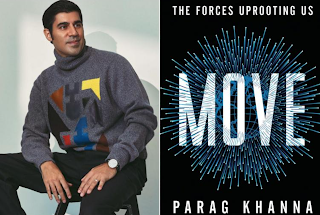
Instead of huddling together to take on these challenges, our anxiety and alienation has made the world more tribal, more fearful, more nationalistic, and we see the worst of populism on the rise. Rather than seeing the world and all this change as an opportunity, too many want to dig in, shelter in place, and simply be angry. How we move on from this is the work and insight of visionary futurist Parag Khanna. Khanna's latest book is Move: The Forces Uprooting Us.
"To discover to the world something which deeply concerns it, and of which it was previously ignorant; to prove to it that it had been mistaken on some vital point of temporal or spiritual interest, is as important a service as a human being can render to his fellow creatures..." John Stuart Mill, "On Liberty"
Monday, February 14, 2022
How Global Migration is Actually Moving the World Forward: My conversation with Parag Kahanna
Instead of huddling together to take on these challenges, our anxiety and alienation has made the world more tribal, more fearful, more nationalistic, and we see the worst of populism on the rise. Rather than seeing the world and all this change as an opportunity, too many want to dig in, shelter in place, and simply be angry. How we move on from this is the work and insight of visionary futurist Parag Khanna. Khanna's latest book is Move: The Forces Uprooting Us.
Friday, February 4, 2022
How Chinese Language is the Core of its Culture: A Conversation with Jing Tsu
That is the story of the evolution of the Chinese language that my my guest Jing Tsu tells in her new book Kingdom of Characters: The Language Revolution That Made China Modern.
Tuesday, January 25, 2022
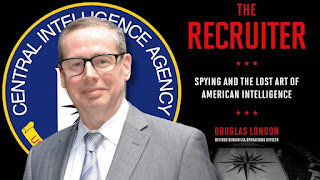
A Love Letter to Spy-craft: A Conversation With Retired CIA Officer Douglas London
And while the nature of spy-craft has evolved, its fundamental missions remain the same. To gather actionable information. To get results.
So when we look at our failure to fully understand the Soviet Union during the Cold War, our inability to understand what to expect in Afghanistan, our shock with the recent Chinese hypersonic missile launch, and the lack of certainty as to what the Russians are planning in Ukraine, what does it say about the state of American intelligence?
Today we’re told that technology is the successor to human intelligence, but what has that wrought, and doesn't it still take humans, and their infinite capacity for suspicion, to understand and interpret that data?
Retired CIA officer Douglas London write about this in his new book The Recruiter: Spying and the Lost Art of American Intelligence
Thursday, January 13, 2022
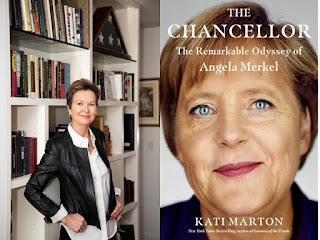
Politics Without Celebrity - Kati Marton's The Chancellor
Such was Angela Merkel, who served for 16 years as German Chancellor. Its first and only woman Chancellor, and without questions the glue that held parts of the world and certainly the Western Alliance together for many years.
What can we all learn from this Greta Garbo of geopolitics? To find out we have to dip into Kati Marton’s new biography of Merkel, The Chancellor: The Remarkable Odyssey of Angela Merkel
Tuesday, January 4, 2022
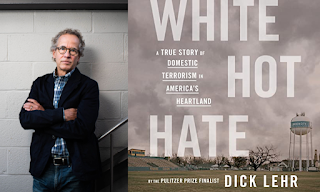
January 6th Was a Rallying Point For White Hot Hate
It’s really no different than when we see protestors in other countries attacking America, burning the American flag, and taking Americans hostage.
In a world moving at the speed of light, tribalism, and hatred for the other, for those that are different, are everywhere. Even in a small Kansas town,
That is the story that Dick Lehr tells us in White Hot Hate: A True Story of Domestic Terrorism in America’s Heartland.
Monday, December 27, 2021
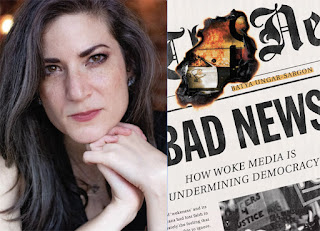
How Fame, Fortune and Education Ended Objective Journalism: A conversation with Batya Ungar-Sargon
Too often when talking about the media and journalism we engage in a board discussion of ideas, policy, and how the levers of power really work
What we often forget is that all of this is made up of people. People who bring to the exercise of power and of reporting on it, their own values, education, and personal history.
In that fact lies much of what is wrong with the media today. It's how we lost sight of the power of class in journalism, why we’ve tried to bury class differences inside racial differences and wokeness.
If all of this sounds too nuanced, Batya Ungar-Sargon, the deputy opinion editor of of Newsweek, helps us understand how it’s shaping our media and democracy in her new work Bad News: How Woke Media Is Undermining Democracy
My conversation with Batya Ungar-Sargon
Wednesday, December 15, 2021
The Modern Era of Television Begins with HBO: A Conversation with James Andrew Miller
The story of HBO, and the way in which it disrupted television, beginning back in the early 1970s, is perhaps the penultimate example.
Just as today we are going through a sea change with respect to how stories are delivered to us, HBO was the creative destruction of its day. Its motto, like Facebook, could easily have been “move fast and break things.”
And just as HBO disrupted television. Blockbuster would eventually disrupt HBO, Netflix would disrupt Blockbuster, and technology and streaming would disrupt everything. But in many ways the story all starts with HBO.
That’s the story that James Andrew Miller tells in his comprehensive and entertaining oral history Tinderbox: HBO's Ruthless Pursuit of New Frontiers
Tuesday, December 7, 2021
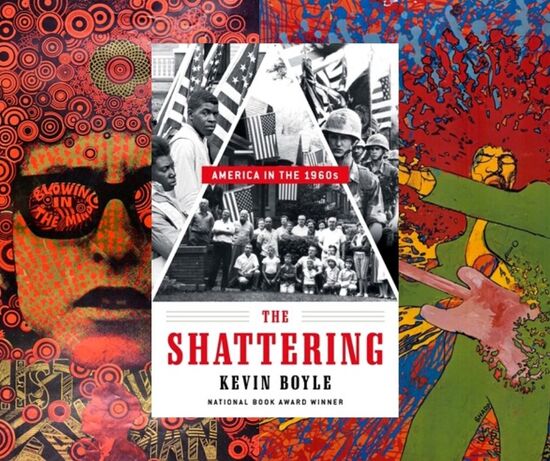
The Shattering: America in the 1960's: A Conversation with Kevin Boyle
In a similar way the 1960s were a time of creative destruction for America and the world. The post war paradigms that had shaped the country through the late 40’s and early 50’s were shattered. And just as today we are struggling, socially, politically and economically to come to grips with the our technology disruption, on a grander scale we are still trying to come to grips with the social and political shattering of the 60’s
We explore this with National Book Award winner Kevin Boyle, whose new book is The Shattering: America in the 1960s
Wednesday, December 1, 2021
The Post-Pandemic Normal Will Never Be the Way It Was
Everyone desperately wants to know what the post-pandemic world will look like. Adam Tooze has been thinking hard about it and he thinks he knows.
Comparing the US experience to China’s, he notes how cultural and political differences have determined successes and failures in dealing with the unprecedented challenge of COVID-19. Tooze argues that, like soldiers returning from mortal combat, we are suffering from a kind of national — and even global — PTSD.
Tooze, Columbia University history and economics professor is the author of Shutdown: How Covid Shook the World's Economy.
My WhoWhatWhy conversation with Adam Tooze::
Tuesday, November 30, 2021
Has the Death of Faith Made Us More Tribal?
According to Ledewith, America's future requires that we begin a new story by asking a question posed by theologian Bernard Lonergan: Is the universe on our side?
My conversation with Bruce Ledewitz:
Friday, November 19, 2021
The Rise and Fall of the NRA and What it's Cost Us: A Conversation with Tim Mak
But how did this power evolve, and what led to its downfall. What was behind its scorched earth “never give an inch” philosophy and was it simple greed and old fashioned corruption that brought it down?
Four years of research have given my guest NPR Washington investigative correspondent, Tim Mak some answers to these and many other questions. He details them in Misfire: Inside the Downfall of the NRA
Thursday, November 11, 2021
China: Enemy or Competitor?
In his recent book, The Strategy of Denial: American Defense in an Age of Great Power Conflict, In it, Colby addresses our relationship with China in brutally frank terms
Some of the questions he sets out to answer:
Do we need a grand strategy for China, similar to the Cold War policy of “containing” the former Soviet Union?
To counter China’s military strength, do we need to remove our troops from Europe and the Middle East, since we are no longer realistically capable of operating in three theaters?
What should we do if China moves on Taiwan?
What role would our Western allies play if we confronted China?
In a US/China conflict, would other Asian nations side with the US or make their own deal with China?
Has US credibility in Asia been irreparably harmed by our Middle East performance?
If China is politically dominant in Asia, does that mean they would also dominate the world economy?
What might a war with China look like?
Tuesday, November 2, 2021
How the Index Fund Changed Finance and Why It's Still So Powerful Today
They think they can outperform markets that have long humbled the smartest guys in the room.
So back in the early seventy, a group of those guys got together to imagine and evolve a way to passively participate in the markets. Long before information about the markets had been democratized. Long before we checked our portfolio every-time we checked our phone, the idea of passive index funds would take hold.
And even in our hyperbolic financial world today, they are still going strong. In fact, they are so powerful, they alone can move markets.
What this all means for markets and economics is worth examining. To do so I’m joined by Robin Wigglesworth, the global finance correspondent at the Financial Times and the author of Trillions: How a Band of Wall Street Renegades Invented the Index Fund and Changed Finance Forever
Thursday, October 28, 2021
Dirty, but Essential Work: A Conversation with Eyal Press
The pandemic has brought new light to these workers. Often, in what has been called essential work. It has highlighted and personified the work we often don’t see, but that we all rely on for keeping the wheels of society working.
Studs Terkel said that “work is about a search for daily meaning as well as daily bread, for recognition as well as cash, for astonishment rather than lethargy; in short, for a sort of life rather than a Monday through Friday sort of dying." And yet for millions of workers this dying that Terkel talked about, is what they face, day in and day out.
We can't imagine what it does to them, but also what it does to our society. This is what Eyal Press examine in Dirty Work: Essential Jobs and the Hidden Toll of Inequality in America.
Monday, October 18, 2021
Looking for America: My Conversation with Evan Osnos
But we didn’t get here overnight, nor did some external forces (no not even Donald Trump) create this environment.
NY staff writer Evan Osnos went, like Simon and Garfunkel, looking for America. He looked in the mix of places he knew best, Greenwich, Connecticut where he grew up, Clarksburg West Virginia where he worked as a young reporter, and Chicago, the very definition of urban America.
The result of that effort is his new book Wildland: The Making of America's Fury
Friday, October 8, 2021
What Is The Future of Transportation? Hint...It's Not A Better Car
Particularly in places like New York, San Francisco, Atlanta and Washington DC, commute times have exploded in recent years.
Perhaps when the dust settles, perhaps what we will have changed as a result of a year at home, is less how we work, and more how we move about.
But will we ever give up our love affair with the automobile? Will new generations approach transportation in a new way? Are flying cars ever going to be a thing? And what can we learn from the last great inflection point as we went from the horse to the car?
All of this is part of Tom Standage’s new book, A Brief History of Motion: From the Wheel, to the Car, to What Comes Next.
Thursday, September 30, 2021
No Cell Service, No Technology and Electrosensitives Everywhere: Stephen Kurczy Talks about "The Quiet Zone"
Saturday, September 18, 2021
As You Look At The Emmys, Remember That It Is Only Streaming and Entertainment That is Bringing the World Together
Is this just a temporary blip due to COVID and the pandemic, or has global entertainment undergone a tectonic shift that both reflects and might reshape our culture? We’re going to talk about this with Scott Roxborough.
Tuesday, September 14, 2021
The News About the News: A conversation with Martha Minow
For local news, however, the story is different. For what’s happening in your neighborhood, your school board, your city council, is a very different story. Thousands of local newspapers and local radio stations have shut down. The economics of the enterprise has proven to be unsustainable, and even large regional papers in places like LA, Chicago, and Miami have proven to be problematic. While many of the best of these papers have been stripped and plundered by hedge funds, let’s also remember that many were acquired by the hedge funds out of bankruptcy.
All of this begs the question as to whether our political, cultural, and social divide stems from the top as is assumed, or whether the hollowing out of news in our communities, something that should be bringing us together, is at the heart of what’s wrong? If so, does the government have a role to play in fixing that effort? Is the problem with the product, with the public, or as it is often so easy to do, should we just blame social media? Understanding this is the work that Martha Minow takes on in Saving the News: Why the Constitution Calls for Government Action to Preserve Freedom of Speech.
Saturday, September 4, 2021
The Myth of "Nobody Saw it Coming"
We are certainly, because of climate change, complexity and complacency, going to be experiencing more such events, we had better become much better at disaster preparedness.
If we know these disaster events are coming, how can we get better at dealing with the consequences? Fire season is yet to reach its peak this year, hurricanes are starting early and we know that more infrastructure and buildings will collapse.
Therefore, the area of disaster management should be one of our number one priority, just as it has been for my guest Dr. Samantha Montano, the author of Disasterology: Dispatches from the Frontlines of the Climate Crisis