Showing posts with label Israel. Show all posts

Tuesday, March 27, 2018

The Israel of 1948 is Over

Back in the 1960s, Richard Nixon would talk and write a lot about the Middle East in general, and about the Israeli situation specifically, and he talked about how it easily could become the flash point of the next world war.

Certainly almost 60 years and many crises later, this is still true. Today, as a second and third generation still hears about settlements and a one and two-state solution, and peace plans are reconstituted over and over again, one wonders, do we even remember how this all got started?

Does the original sin grow out of the post-World War I agreements of 1916, or did something happen after Israel’s success in the Six-Day War, in 1967? Did Israel, to paraphrase our current President, get “tired of winning”?

So one more time, we’re going to go back and look at the past, the present, and the future of the Israeli enterprise. This time, with Avraham Burg.  One time Speaker of the Israeli Knesset. He’s a past leader of the World Zionist Federation and the Jewish Agency for Israel. He served in the Israeli Labor Government of Shimon Peres, and back in 2004, he retired from active involvement in politics and is the author of In Days to Come: A New Hope for Israel.

My WhoWhatWhy.org conversation with Avraham Burg:


Thursday, October 20, 2016

The Desert and the Cities Sing

Looking at the broad sweep of history and change in the 20th and 21st Century, it’s arguable that the dynamics of Israel, its relationship to its neighbors and the meaning of the Zionist project, remain one of the most complex, historic and creative endeavors of our time.

But how did it all get this way and what can the world learn from all the good that’s come out of Israel?  How did the desire for a homeland, a base for the Jewish diaspora, become so complex and lead to a statistically improbable amount of business and artistic success. And perhaps most importantly, can all of this power through the burdens of history.

Nowhere is this shown in a more dramatic and beautiful fashion than in the work of Lin Arison, Diana Stoll and Neil Folberg in  The Desert and the Cities Sing: Discovering Today's Israel: A Treasure Box.

My conversation with Lin Arison and Diana Stoll:


Tuesday, June 28, 2016

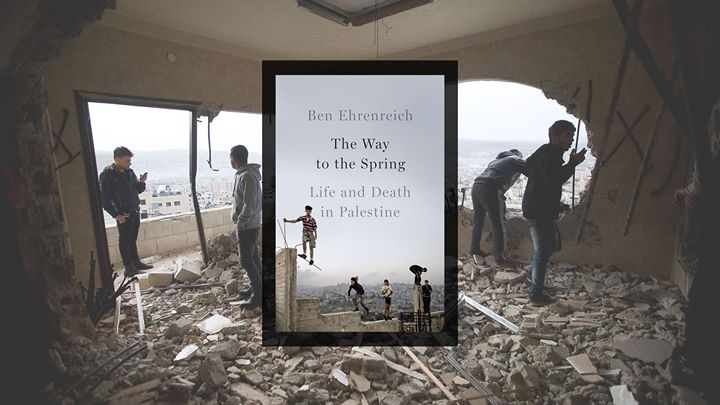
Life and Death in Palestine

One of the things we have been hearing lately, with respect to our own domestic politics,is the debate between conscience and politics. Sometimes our desire to see our own side win, has to be tempered by a broader view of the moral and human dimensions of an issue.

The ongoing struggle in the Middle East between Israelis and the Palestinians is no different. No matter the depth of our appreciation for the remarkable miracle that is Israel, the matter of the Palestinian people and some of the decisions and actions taken by Israel must be viewed in a larger moral context. In order to do that we have to really understand what’s happening on the ground, in places like the West Bank and Gaza.

Ben Ehrenreich has been there. Following the first rule of journalism he has gone there to live among the people and learn first hand the enormity of what’s going on. He writes about what he’s seen in The Way to the Spring: Life and Death in Palestine

My WhoWhatWhy.org conversation with Ben Ehrenreich:


Monday, November 3, 2014

Just how absurd is life on the West Bank?

The Middle East is always ripe with stories. Unfortunately, few get to the heart of the absurdity of the human condition there. In much the way that Catch 22 or Mash did for our wartime military, The Hilltop, a new novel by esteemed Israeli writer Assaf Gavron does for the settlements on the West Bank.

My conversation with Assaf Gavron:


Bookmark and Share

Wednesday, December 11, 2013

The Triumph and Tragedy of Israel

Even looking at the broad sweep and scope of history and change in the 20th century, it’s arguable that the dynamics of Israel, its relationship to its neighbors and the meaning of the Zionist project remain one of the most vexing and truly complex issues of our time.

For events that began at the end of the 19th Century, clearly and directly link to the issues being talked about and dealt with this very day in Tel Aviv, Tehran and Washington.

But how did it all get this way? How did the desire for a homeland, a base for the Jewish diaspora, become so complex and lead to a statistically improbable number of foreign policy mistakes, on all sides?

And finally, can this huge ship, carrying the burdens of this history, be turned around in time to avert crashing into the rocks ahead.

Israeli Journalist Ari Shavit has written what has been called "the least tendentious book about Israel." A non doctrinaire examination of Israel’s past, present and future, My Promised Land: The Triumph and Tragedy of Israel, is a book we’ve all needed for quite some time.

My conversation with Ari Shavit:


Bookmark and Share

Saturday, November 2, 2013

A beacon of democracy or an apartheid state?

If I said that this conversation was about authoritarian politics, the religious right, a demographic crisis facing one political party, and the continued rise of military power, you would easily assume we would be talking about the US. In fact, these same forces are at play in greater Israel, and they are constantly reinforced here, by perhaps the most powerful political lobby in the United States.

The complexity of Israeli politics, its relationship with the US, and its impact on our own politics are all issues that exist not just in the abstract world of policy wonks. Each and every day they impact the lives of thousands of people on the ground in Israel, Gaza and the Middle East.

Max Blumenthal takes a brave and controversial look at this in Goliath: Life and Loathing in Greater Israel.

My conversation with Max Blumenthal:


Bookmark and Share

Tuesday, April 17, 2012

Israel on the brink

In his new book The Crisis of Zionism, esteemed journalist, author and professor Peter Beinart argues that Israel is in danger. Not just from outside forces, not just from Palestinians or Iranians, but from the unraveling of its own core values, central ideas and founding principals. He says that we need to view Israel today not as some Disneyfied version of the holy land, but as a modern nation state, with real power, that must merge the responsibility of that power, with the values that created it in the first place. And that perhaps the greatest threat to accomplishing this, comes not only from within Israel itself, but from an American Jewish community that has made power, real estate and Zionism a religion unto itself. My conversation with Peter Beinart:


Click here to listen on your iphone or ipad

Bookmark and Share