Friday, September 30, 2016

I Wonder Who's Kissinger Now?

Few modern day political figures have had more written about them than Henry Kissinger. From his own three volume, almost 4000 page memoir, to scores of books and articles. So why another we might ask historian Niall Ferguson.

Partly because beyond the policy and papers, in Ferguson's view Kissinger personified that George Bernard Shaw quote,  “Some men see things as they are and say, why; I dream things that never were and say, why not.”

That vision, that idealism, is hard to imagine in someone so vilified by contemporary history. Still, Niall Ferguson tries to square this circle in the first volume of his biography Kissinger: 1923-1968: The Idealist

My conversation with Niall Ferguson:


Tuesday, September 27, 2016

How Well Do We Really Know Our Parents?

No matter how close or estranged any of us may be for our parents, there always linger the questions of how well do we know them...that is really know who they are. Think about the questions kids wonder about, what their parents really do a work, their sex lives, the conversations that go on after they go to bed.

And as kids become adults they often still wonder...and sometimes they even transfer those very same questions in trying t understand their partners, or their spouses and ultimately themselves.

Because we are the sum total of the answers to so many of these questions. We keep seeking answers, aware of it or not, since it is a large swath of who we are. This intimate search for identity is at the heart of Susan Faludi’s new work In the Darkroom.

My conversation with Susan Faludi:


Friday, September 23, 2016

Where Is The Truth We Have Lost In Information?

We are awash in information. Estimates are that 2.5 quintillion bytes of data are produced every day. That’s everything from data from space probes to your photos on Facebook. Google alone process approximately 3.5 billion requests per day.

But as TS Eliot so aptly said back in 1934, “where is the knowledge we have lost in information?”

From the billions of items posted on Facebook, to the tens of thousands of so called news sites and bloggers around the world, how is it even possible to begin separate it all, to know fact from fiction?

Never before in human history or human evolution have we encountered such a problem. As a result the way we approach it has to take the best thinking tools we’ve evolved and transform it to meet the needs of the 21st century and beyond,.

This is the road map for finding truth that  Daniel J. Levitin has put forth in A Field Guide to Lies: Critical Thinking in the Information Age.

My conversation with Daniel Levitin:


Tuesday, September 20, 2016

Religion, Politics and Culture...Oh My

It is the job of historians and journalists to take contemporary information and give context and connection to events far beyond the time in which they happened. This is true for wars, for politics and for religion.

It’s true even in these highly polarized times, when we all hear the admonition, especially around get togethers of family and friends, to make sure you never discuss politics or religion.

So what is it about both of these subjects that are so personal, so internal, so potentially inflammatory and have been so powerfully connected both historically and right here in America.

This is part of what Ken Woodward examines in Getting Religion: Faith, Culture, and Politics from the Age of Eisenhower to the Era of Obama..

My conversation with Ken Woodward:


Sunday, September 18, 2016

Race and Medicine

Nothing in the medical world is the way it used to be. Change is everywhere. The economic pressures, the political pressures and the very men and women who choose medicine as a career, has all being undergoing disruption.

Add to this maelstrom the issue of race. The shocking lack of black physicians, diseases that overwhelming impact black communities and the inherent complexities of race in the doctor/patient relationship and you see some of the problem in medicine that have confronted Dr. Damon Tweedy. A graduate of Duke Medical School and Yale Law School Dr. Tweedy shares his personal story in his memoir Black Man in a White Coat: A Doctor's Reflections on Race and Medicine.

My conversation with Dr. Damon Tweedy:


Friday, September 16, 2016

If You Want To Understand America, Look At Its Food

We’ve all seen the pushback to Michelle Obama as she has attempted to improve food quality and nutrition in our nation’s schools. In part, it reflects the degree to which everything is politicized these days. But it also reflects the degree to which food is and has been a political, cultural and historical touchstone

It’s long been observed that if we want to understand the history of a nation or a city or a period in time, we can start by looking at its food.

Jane Ziegelman and Andrew Coe have long taken this approach and now they look at the food of depression era America in their new book A Square Meal: A Culinary History of the Great Depression.

My conversation with Jane Ziegelman and Andrew Coe:


Thursday, September 15, 2016

A look back at a great journalist - A conversation with Robert Timberg


Robert Timberg was a great journalist and a Marine combat veteran.  He passed away last week. We spoke to him back in August of 2014 about his memoir BLUE-EYED BOY. 

Think about the things that shape our world, our perceptions and our culture. For a large part of the population, the experience of America’s mistakes in Vietnam has long shaped our engagement in the world. The country's disrespect, at the time, for the service of those that served in Vietnam, in many ways positively shapes the way we respond to Veterans' needs today.

As leaders today try and juggle the crisis of the world, and play a kind of geopolitical chess, they are always chastened by the scandal that was Iran/Contra,

And as any magazine or look at popular culture today will tell you, we are obsessed with outward appearances, usually at the expense of depth and real understanding. All of these issues and ideas come into play in the life and struggles of Robert Timberg.

Disfigured in a land mine explosion thirteen days before he was to leave Vietnam, his story, his struggles and his recovery in many ways parallels the story of the past half century. It’s what makes him so effective as a journalist and why his story, that he now tells us in his memoir Blue-Eyed Boy, is also a history lesson for us all.

My conversation with Robert Timberg:


Bookmark and Share


Wednesday, September 14, 2016

Strangers in Their Own Land

The very fact that an unqualified, demagogic, racist could be close to the Presidency tells us less about the candidates and more about the shape and mood of America in the 21st Century.

The red/blue divide is after all, not about pure politics. It’s not about classical liberalism vs. Burkean or Randian conservatism. It’s not Disraeli vs. Gladstone.

What we see in America today is a cultural divide. One in which our own personal experience breaks out and defines itself into a kind of moral and political matrix that both traps and defines us.

These principles are universal and enduring and perhaps if we can better understand them, we can, if not accept, at least have compassion for the better angels of our opponents.

That exactly what noted sociologist Arlie Russell Hochschild has tried to do in Strangers in Their Own Land: Anger and Mourning on the American Right

My Conversation with Arlie Russell Hochschild:


Monday, September 12, 2016

A Stranger in a Strange Land

It’s a funny thing, all this talk about trade and globalization. On the one hand it’s used to divide us. To create walls and differences. But in fact, it has been one of the most powerful forces in shrinking the world. In allowing us to move personally, not unlike goods and dollars, freely between nations and cultures.

But even with the cultural homogenization of globalization, it has allowed us to appreciate and to come to understand how other cultures operate, what they value and how they see the world. In the end, it allows us to return home again and in the words of T.S. Eliot, “know the place we started, as if for the first time."

That the story that Frank Ahrens lives and share in Seoul Man: A Memoir of Cars, Culture, Crisis, and Unexpected Hilarity Inside a Korean Corporate Titan.

My conversation with Frank Ahrens:


Wednesday, September 7, 2016

Rock's Darkest Day

We think that events move at a rapid pace today. But back in the late 1960’s, events spiraled out as if in a whirlwind. In 1967 San Francisco experienced the Summer of Love. Just two summers later, we would all experience men landing on the moon, Woodstock, the Manson killings and the concert at Altamont that would perhaps mark the end of the era of Peace Love and Music.

It wasn’t long after Altamont that the racial tensions would escalate. People like George Jackson would dominate the news. Hundreds of bombing would take place on the streets of America, The SLA would kidnap Patty Hearst and everyone would look back at Altamont as a turning point.

Joel Selvin's Altamont: The Rolling Stones, the Hells Angels, and the Inside Story of Rock's Darkest Day, puts it all in the perspective of the times.
look at

My conversation with Joel Selvin:


Wednesday, August 31, 2016

"What Does Home Mean To You?"

When the national conversation does turn to real economic issues, it’s usually about numbers. Growth, GDP, home ownership and of course, the ongoing and too slow recovery.

What we often overlook is the impact of those number on real people. Not just those at the bottom, not those left behind. But those struggling to maintain a middle class life. The psychological impact that it has on their families, their marriages, their children and the way that it completely alters the trajectory of their lives.

There is a real estate website that advertises with the slogan, “What does home mean to you?”  The most obvious meaning is a physical location where you live. But home is so much more than a warm bed and a comfy couch. Like it or not, it's come to represent love, security and connection. Home isn't a place, as much as it is a state of mind. This is at the heart of Joe McGinniss Jr's Carousel Court.

My conversation with Joe McGinniss Jr.


Monday, August 29, 2016

Hillbilly Elegy

Amidst all the talk of the things that divide america, Race and Class always rise to the top. Over the years there have been many efforts to understand the social, cultural historical and policy underpinning of both of these divisions. And sometimes even efforts for solutions.

Add to this list of efforts the work of J.D. Vance in his captivating work Hillbilly Elegy: A Memoir of a Family and Culture in Crisis. Vance takes us deeply, from his own profound experience, into the heart of poor and rural America to try and help us understand the the resentment, intergenerational poverty and loss of hope that seems to be driving 45% of our country today.

My conversation with J.D. Vance:


Friday, August 26, 2016

Parents should be Gardeners and not Carpenters

For those of us that are parents, or grandparents, we are told over and over that parenting is the most important job we will ever have.

The assumption is that if we buy Baby Einstein, enroll our kids in the best preschool, (sometimes costing as much as college) provide just the right mix of extracurricular activity and teachers and pour in the right measure of self esteem, we will turn out, as if from a factory, the perfect child. One ready to take on the challenges and leadership of their world and one that will continue to be a part of the parenting/industrial complex

But is any of this true? What do children, with all their curiosity, really need? Do they need to be moulded, sculpted, or do they simply need room to grown and with lots of love as the fertilizer?

These are the questions that Alison Gopnik has been asking for years and now she bring all of this together in her newest work The Gardener and the Carpenter: What the New Science of Child Development Tells Us About the Relationship Between Parents and Children.

My conversation with Alison Gopnik:


Wednesday, August 24, 2016

How Did Our Politics Get So Harsh? The 1968 Election and the Politics of Division

One of the great benefits of a long history is that when things get tough in America, we can look back to see how we as a people and as a nation survived other very trying experiences. The transformations of the Industrial Revolution at the turn of the last century put great strain on the country. McCarthyism in the ‘50s tried our political conscience and the upheavals and social and political transformations of the ‘60s’ shook the nations to its very roots

Riots, racism, political assassination and long seething anger all set the stage for the politics of 1968. A unique set of characters enlivened the political landscape, including Lyndon Johnson, Richard Nixon, George Wallace, Hubert Humphrey, Robert Kennedy, Ronald Reagan and Nelson Rockefeller. The question then, as I suppose it is today, is where the politicians shaped the issues or the issues shaped and tested the politicians? National political columnist, Michael A. Cohen in American Maelstrom: The 1968 Election and the Politics of Division, makes the case that the election of 1968 tested nation and maybe even laid the predicate for where we are 48 years later.
My WhoWhatWhy.org conversation with Michael Cohen:


Wednesday, August 17, 2016

"Stoking the Star-Maker Machinery"

Hollywood has always served a dual role, as both a reflection of the times is operates in and a projector sending out its light showing the broader changes taking place in society.

Just as the original Hollywood moguls, people like Warner and Selznick and Mayer, represented a generation that changed the “white shoe” world of business, people like the founders of CAA, men like Mike Ovitz and Ron Meyer, personified and were the apotheosis of the buttoned down world of Wall Street coming to Hollywood in the 70’s and 80’s.

Like every business, things would continue to change. A new generation would emerge. The old guard would be pushed out, or burn out and a group of so called young turks would emerge.

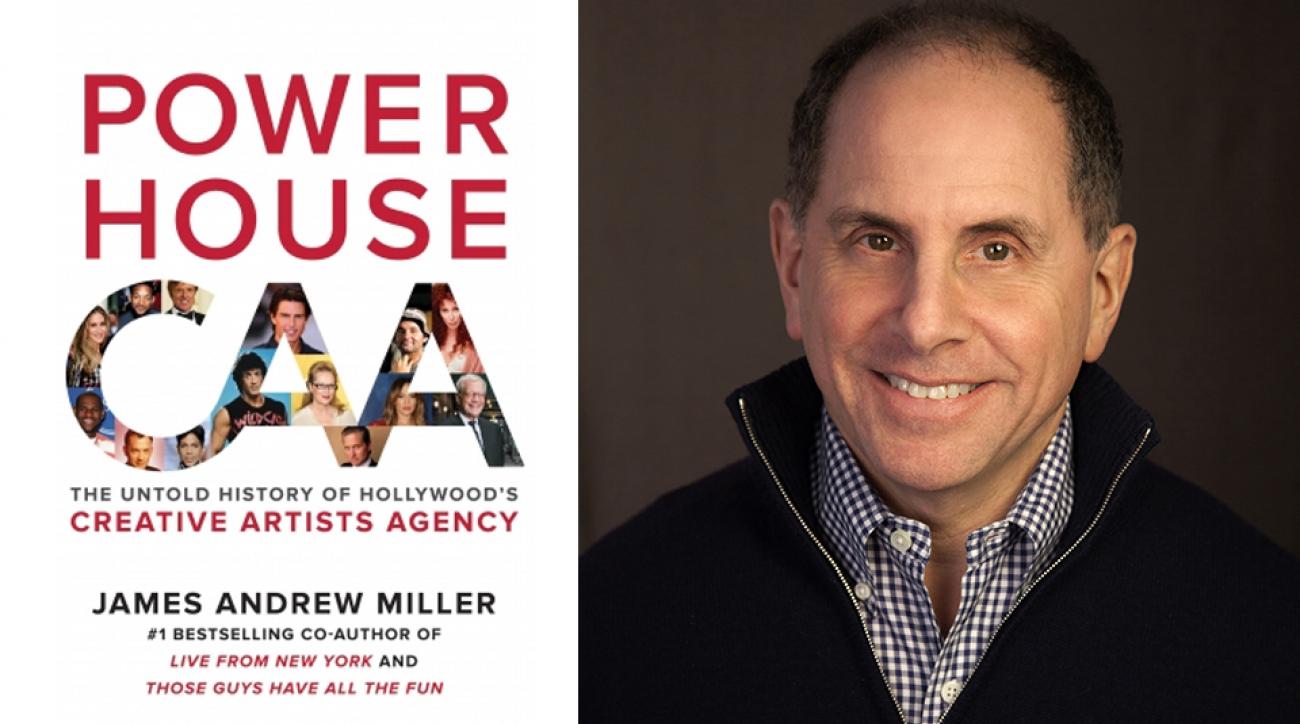
This ongoing story of the history of CAA is both Shakespearean in its drama and contemporary in subject. It’s that story that my guest James Andrew Miller tells in Powerhouse: The Untold Story of Hollywood's Creative Artists Agency.

My conversation with James Andrew Miller:


Tuesday, August 16, 2016

Back to School

People used to joke that the one subject that everybody talked about was the weather. Today, it may very well be that the subject is education. Listen at school events, at the grocery store, at sporting events, everywhere there are parents and children, education is often topic one.

Along with that conversation are lots of buzzwords, opinions, traditional talk and the desire for change. Dr. Thom Markham is at the cutting edge of that change.

In the world of work, where people like futurist and Wired magazine founder Kevin Kelly say that today's employers have to “train for skills but hire for attitude,” clearly we have to rethink what education is all about. And few are doing that more than Dr. Thom Markham.

My conversation with Thom Markham:

Wednesday, August 10, 2016

An American Heiress in a Time Far More Violent Than Our Own

There are many defining markers of particular eras in American history. One of them is notorious crimes.

Think about it. Sacco and Vanzetti , the Lindbergh kidnapping, Jeff McDonald, Charles Manson, Ted Bundy, O.J. Simpson and the kidnapping of Patty Hearst. All are indelibly etched into the American psyche and each represents a set of fears and cultural markers.

Today, when domestic terrorism is on all of our minds, the story of Patty Hearst, the Symbionese Liberation army and its rag tag affiliates were a time when literally thousand of bombing were taking place on US streets. It’s a time well worth looking at. That what Jeffrey Toobin does in American Heiress: The Wild Saga of the Kidnapping, Crimes and Trial of Patty Hearst

My conversation with Jeffrey Toobin:

Friday, August 5, 2016

Why Streisand Still Matters

Pick up any celebrity magazine in any grocery store line and the people gracing the cover were almost certainly unknown five years ago and most likely will be forgotten in another five years. Such is the transitory nature of celebrity culture today.

Of course there are exceptions. Mostly these exceptions are celebrities that are famous not just for being famous, but because they have given the public something unique in terms of their art, their personality and the narrative of how they achieved their fame. Such is the case with Barbra Streisand. Biographer Neal Gabler gives us a the big picture in Barbra Streisand: Redefining Beauty, Femininity, and Power.

My conversation with Neal Gabler:

Thursday, August 4, 2016

How the World is Getting Faster, Faster

We throw around words and ideas about technology, about disruption, about progress and the impact of technology in speeding up our lives.

The fact is, it’s more than just technology. As we move to cities at increasing rates, as the workplace demands greater productivity, as global competition abounds, as we experience the globalization of acceleration, the pressures to speed up are everywhere.

But how fast is fast? How fast exceeds our evolutionary and biological ability to cope? And what happens to the the anger of those left behind in the cloud of dust from creative destruction.

These are just a few of the issues taken up by Robert Colvile in The Great Acceleration: How the World is Getting Faster, Faster.

Tuesday, August 2, 2016

Why the nuclear codes still really matter

In this time of asymmetrical warfare, terrorism, and the war images that have been projected into our living rooms since Vietnam, it's easy for those not alive fifty years ago to forget, or even not even consider, the fear, the horror and the specter of nuclear annihilation.

The President's recent trip to Hiroshima and the fear of Trump having nuclear codes are both reminders that the nuclear reality still lives among us.

That reality is what motivated three unlikely activists in the summer of 2012 to break into one of our nation's seemingly most secure nuclear facilities. In so doing they triggered political, legal and moral issues that had lied dormant for so long.

Telling this powerful story and what it says about the nuclear age is my guest Washington post reporter Dan Zak in Almighty: Courage, Resistance, and Existential Peril in the Nuclear Age.

My conversation with Dan Zak: