Showing posts with label Hollywood. Show all posts

Saturday, September 18, 2021

As You Look At The Emmys, Remember That It Is Only Streaming and Entertainment That is Bringing the World Together

It wasn’t very long ago that to see a foreign language film, you wound up in the smallest theater in the multiplex or a little art theater somewhere in a college town...or you lived in New York or San Francisco or Boston. But like everything else, creative destruction has done its job. Streaming and the long tail of the internet has moved to supplant cable, movie theaters, broadcast television, and even the English language as the talisman of all of our entertainment. 
Even amidst the bifurcation and division in both the US and the world, filmed entertainment seems to be one of the few things bringing the world together. Suddenly at our fingertips is programming made everywhere. And rather than looking at it as an oddity reserved only for a few cinephiles, it’s now working its way into the mainstream of all of our living rooms.

Is this just a temporary blip due to COVID and the pandemic, or has global entertainment undergone a tectonic shift that both reflects and might reshape our culture? We’re going to talk about this with Scott Roxborough. 

Scott is an international reporter covering film and television and music. He reports on entertainment from Europe for the Hollywood Reporter, Billboard, and German TV, and wrote a seminal article for the Hollywood Reporter dealing with this subject. 

My WhoWhatWhy.org conversation with Scott Roxborough:


Monday, February 15, 2021

Mike Nichols: A Life

Amidst the cacophony of social and cultural noise that’s all around us, we have too often neglected the role of the arts in shaping who we are and how we might be better, or at least different. 
Like almost everything else, we tend to commodify the arts. Everything from streaming revenue, to box office grosses, to the price of paintings at auction. 

I would argue that what we don’t do enough of is look deep into the artists themselves. Artists who by the very nature of their work, must keep their emotions closer to the surface. And in so doing, we can see how their work reflects the best and worst aspects of our culture. 

Mike Nichols was such an artist. In a multi decade-spanning career, the films and plays he directed have in some ways impacted us all. In the early comedy of Nichols and May, to the social insights of films like The Graduate, Silkwood, Who’s Afraid of Virginia Woolf, Catch 22, to his plays that reflected who we were in the human comedy, he not only understood his art and craft, but valued other artists; specifically actors and writers as creative tools to help him to help us see the world. 

Mark Harris gives us all of this in his new biography Mike Nichols: A Life 

My conversation with Mark Harris:


Tuesday, August 13, 2019

To Live and Work In Hollywood

Hollywood is a place where the assets go home each night. Not just the Stars, but the hard-working men and women who make magic happen. Who each play a singular and unique role in telling cinematic stories. Each is a piece of a large puzzle and without each individual piece, the picture never comes together.

Sure Hollywood is a business and billions are dollars are always at stake. But without the experience, the craft and the talents of those behind the camera, none of it happens.

These are the “gig workers” that writer-producer Bruce Ferber gets to open up in The Way We Work: On The Job in Hollywood.

My conversation with Bruce Ferber:


Friday, May 5, 2017

The Rise of A Woman In Hollywood

There was a time, not that long ago, in a galaxy not that far away, when Hollywood made movies that were both entertaining and substantive. You know, the kind we see now on Netflix, or Amazon, or HBO or Showtime.

They were movies like Fatal Attraction, Forrest Gump and Braveheart,

It was a time even when a woman would rise to the top of the Hollywood hierarchy even at 20th Century Fox…. in the pre Murdoch era.

So much of this history is embodied in the story that Stephen Galloway tells in his new biography of Hollywood executive and producer Sherry Lansing.

Leading Lady: Sherry Lansing and the Making of a Hollywood Groundbreaker is first a story about Hollywood. But it’s also a human story, about the confluence of who we really are, and what we choose to do with our lives.


Wednesday, August 17, 2016

"Stoking the Star-Maker Machinery"

Hollywood has always served a dual role, as both a reflection of the times is operates in and a projector sending out its light showing the broader changes taking place in society.

Just as the original Hollywood moguls, people like Warner and Selznick and Mayer, represented a generation that changed the “white shoe” world of business, people like the founders of CAA, men like Mike Ovitz and Ron Meyer, personified and were the apotheosis of the buttoned down world of Wall Street coming to Hollywood in the 70’s and 80’s.

Like every business, things would continue to change. A new generation would emerge. The old guard would be pushed out, or burn out and a group of so called young turks would emerge.

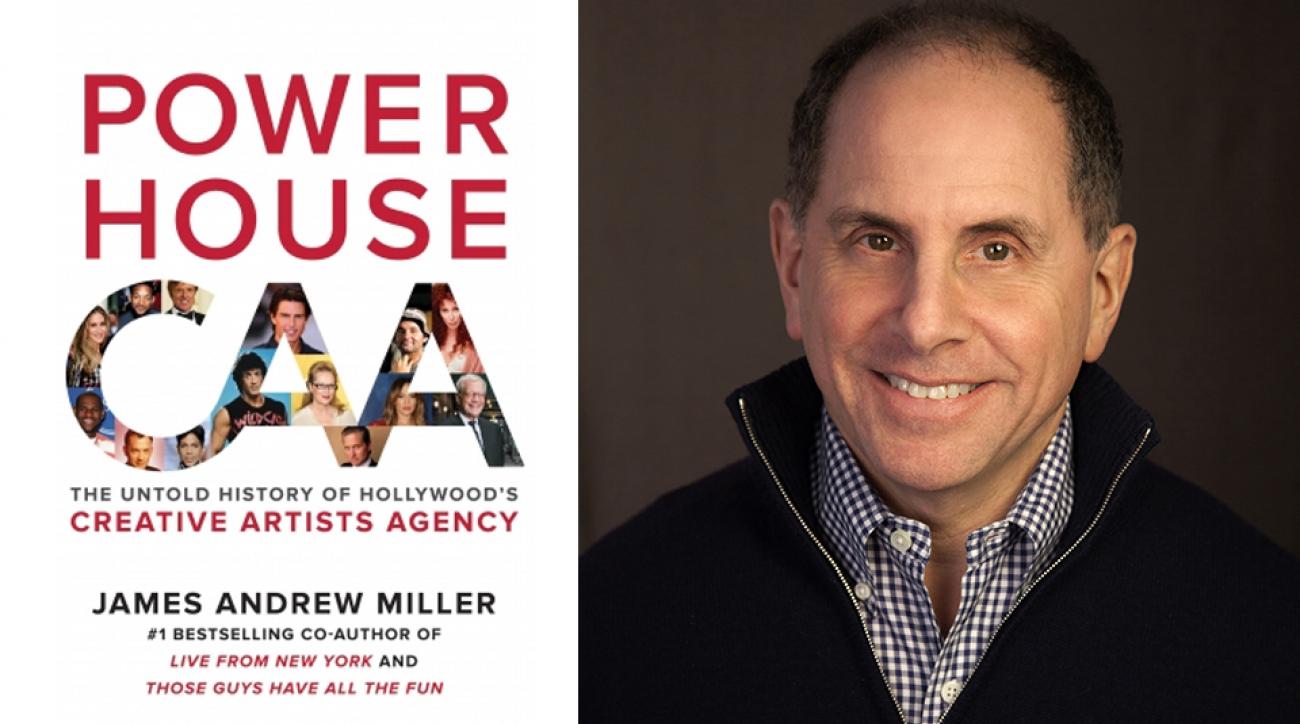
This ongoing story of the history of CAA is both Shakespearean in its drama and contemporary in subject. It’s that story that my guest James Andrew Miller tells in Powerhouse: The Untold Story of Hollywood's Creative Artists Agency.

My conversation with James Andrew Miller:


Friday, August 5, 2016

Why Streisand Still Matters

Pick up any celebrity magazine in any grocery store line and the people gracing the cover were almost certainly unknown five years ago and most likely will be forgotten in another five years. Such is the transitory nature of celebrity culture today.

Of course there are exceptions. Mostly these exceptions are celebrities that are famous not just for being famous, but because they have given the public something unique in terms of their art, their personality and the narrative of how they achieved their fame. Such is the case with Barbra Streisand. Biographer Neal Gabler gives us a the big picture in Barbra Streisand: Redefining Beauty, Femininity, and Power.

My conversation with Neal Gabler:

Thursday, September 24, 2015

This woman changed and defined Hollywood in the 70's

Hollywood is a like sports or politics. Each generation gives us stars and personalities that both reflect the culture and tenor of the times and also transcend it in ways that pave the way for the next generation.

By the 1970’s Hollywood had seen a lot of agents. Names that you’ve seldom hear of. Men like Lew Wasserman, Myron Selznick, Swifty Lazer and Abe Lastfogel shaped the lives and careers of celebrities.

And while by the 70’s woman were emerging in the more cloistered world of New York literary agents, one woman would put her mark on Hollywood in a way that came to define an era. One that combined the glitz and glamor of early Hollywood, with the informality and countercultural fervor of the 70’s.

That woman was Sue Mengers. She the subject of biographer Brian Kellow’s new book Can I Go Now?: The Life of Sue Mengers, Hollywood's First Superagent.

My conversation with Brian Kellow:


Monday, March 9, 2015

How the Constitution Invented Hollywood and Silicon Valley

Few classes in law school are drier and more arcane than courses on patents and copyrights. And while the debate about intellectual property includes the worlds of entertainment, literature and technology, we don’t often make the connections between those arcane laws, the Constitution that laid down their predicate and the creativity that they seek to protect.  But that is exactly what Elizabeth Wurtzel does in her new book Creatocracy: How the Constitution Invented Hollywood.

My conversation with Elizabeth Wurtzel:


Bookmark and Share

Saturday, June 14, 2014

Films Not to be MIssed

Think about the movies we remember. They are a little like old songs, or great books, or great meals. They are purveyors of a kind of double imagery, instantly making yesterdays events todays reality.

But with movies there is something more, in the way they stay with us. The way the images play around in our heads and the memories, words and images become embodied in who we are.

If you grew up watching and loving movies, like esteemed film critic Kenneth Turan, they take on an even more powerful meaning.

Now Turan has taken a look, in the rear view mirror at a  lifetime of film and chosen his fifty-four favorites, detailed in his new book Not to be Missed: Fifty-four Favorites from a Lifetime of Film.

My conversation with Kenneth Turan:


Bookmark and Share

Saturday, March 29, 2014

The Changing reality of the Business of Hollywood

When it comes to Hollywood, William Goldman certainly may have been right when he said that, “nobody knows anything.” Certainly the forces that drive Hollywood have always been somewhat mysterious. Why and how pictures get made, why some get to be hits and others misses. How some generate buzz and some actors and movies get hot, all sometimes seems
to be the stuff of movie magic.

And all of this was before the digital age. Before Netflix, and Amazon and Hulu and Pirate Bay and digital prints: Before on demand and binge watching were everyday words.

Today, the nuances of the film “business” are such, that it sometimes stretches the credibility of the word business. Yet even amidst all of these changes, 2012 was a banner year. After two previous declining years, 2012 generated over 11 billion dollars at the box office and even gave us some decent movies like Argo, Silver Linings Playbook, Life of Pi, Lincoln, Django Unchained and Zero Dark Thirty.

What did this year of 2012 mean in the new paradigm of Hollywood? Longtime film journalist Anne Thompson takes us through the year in The $11 Billion Year: From Sundance to the Oscars, an Inside Look at the Changing Hollywood System.

My conversation with Anne Thompson:


Bookmark and Share

Wednesday, October 24, 2012

The Cold War in Movies

This week we mark what was arguably the height of the Cold War, in the 50 anniversary of the Cuban Missile Crisis. That Cold War would, for years, permeate every aspect of our culture. The paranoia and anxiety of the period was perhaps most notably reflected in our films, and the divisions of the of the time were part and parcel of the industry that produced them.

One of our nations most distinguished film critics, J Hoberman looks at this connection between American movies and the Cold War in his new book An Army of Phantoms: American Movies and the Making of the Cold War.

My conversation with J. Hoberman:

Click here to listen

Bookmark and Share

Monday, March 30, 2009

The last tycoons

Richard Florida takes on the end of Hollywood as we know it.  Money quote:
The world will always need entertainment, and Southern California is the odds-on favorite to produce it. It has the history, the people, the infrastructure and the creative energy. But as Detroit automakers and New York’s financiers have learned, these natural advantages can disappear when an arrogant and insular industry comes to view its dominance as inevitable and its outsized compensation as an entitlement.