Monday, June 21, 2010

Urban Renewal in '50's New York - What we've learned


The post war rise of Manhattan as a modern world city and its later decline into crisis, had "urban renewal" at the heart to both its cultural and physical transformation. These policies even laid the groundwork for what we view today as gentrification. Samuel Zipp, a Professor of Urban Studies at Brown University, in his new book Manhattan Projects: The Rise and Fall of Urban Renewal in Cold War New York, captures the complex world of forgotten stories and characters that make up urban renewal's promise and tragedies.

My conversation with Samuel Zipp:

Bookmark and Share

Thursday, June 17, 2010

The Promise

President Obama came to office with less experience then most of our contemporary Presidents. His was an improbable and unlikely victory. He inherited a country on the brink of depression, engaged in two wars, an ongoing threat of international terrorism, increased partisan gridlock and extremism, growing unemployment and the increased power of big business. And if that wasn't enough, his first big goal was to try and expand healthcare coverage, something that had beguiled Presidents since Teddy Roosevelt. All of this was in year one!

Newsweek senior editor and NBC correspondent Jonathan Alter's new book The Promise: President Obama, Year One, is the first definitive account of Obama's first year in office.

My conversation with Jonathan Alter:

Bookmark and Share

Wednesday, June 16, 2010

She looks just like you.

Choosing parenthood in the best of circumstances is a complex and daunting journey with no guarantees of success. But when you have to adopt your own child, when you have to show up at the hospital with a thick folder of legal documents to justify your being there, it's even more difficult. The number of children being raised by gay parents is growing each year. Yet the challenges are growing as well. Amie Klempnauer Miller, in her memoir She Looks Just Like You: A Memoir of (Nonbiological Lesbian) Motherhood, tells about her 12 year, often darkly comic, journey to the doorstep of motherhood.

My conversation with Amie Klempnauer Miller:


Bookmark and Share

The Rational Optimist

A rare optimistic post. Even amidst all the problems we face, economic, environmental, political and global; history teaches us that progress is inevitable. While there are certainly winners and losers, overall mankind has, since the stone age, marched forward toward a brighter day. While we see more and more fear about change, we even see a kind of pathological nostalgia in some quarters, the fact is, by every objective measure, the world is getting better. That's the focus of Matt Ridley's new book The Rational Optimist: How Prosperity Evolves.

My conversation with Matt Ridley:

Bookmark and Share

Tuesday, June 15, 2010

What's a nice girl like you, doing in a place like this?

After graduating from Smith College, Piper Kerman fell in with a bad relationship and a hard-partying, drug dealing crowd. Ten years after she left it all behind, her past came back to haunt her. In her memoir Orange Is the New Black: My Year in a Women's Prison, she tells the powerful, heartfelt story of her 15 months in federal prison, of the women she met and befriended and of the idea and power of community, even behind bars.

My conversation with Piper Kerman:


Bookmark and Share

Monday, June 14, 2010

Work isn't working

How many of you are energized about going to work each day? If you are not, you are in the company of 75% of employees around the world who feel disengaged at work. As the recession has increased pressures for productivity, as twelve and fourteen hour days become the norm, as technology tethers us to work 24/7, it's no wonder that job satisfaction is waning. Yet, if we are to stay competitive, if we are to provide the creative energy to solves tomorrows problems, something has to change. Tony Schwartz, founder of The Energy Project and long time journalist, in his new book The Way We're Working Isn't Working: The Four Forgotten Needs That Energize Great Performance,gives us a primer on what we can do to take back control of our work life and at the same time increase job satisfaction and performance.

My conversation with Tony Schwartz:

Bookmark and Share

Friday, June 11, 2010

Mind over message


For those that have read Matt Richtel's article and listened to our conversation below and are concerned that your brains are being rewired by your gadgets, here is Harvard psychology Professor Steven Pinker's answer in today's NY Times.

Thursday, June 10, 2010

Crackberry

For most of us, being plugged in 24/7 has become the norm. Blackberrys, iphones and ipads have now been layered on to the computer, email, video games and the good old fashion phone. The idea was that all of this technology was supposed to make us more productive and more efficient. In fact, it has made us addicted, distracted, a little bit crazy and a lot less efficient. This is the story that appeared in the N.Y. Times this past Monday, by NY Times, Pulitzer Prize winning reporter Matt Richtel. It has garnered world wide attention, and has been e-mailed to Blackberrys and iphones everywhere. 

My conversation with Matt Richtel:

Bookmark and Share

This is to good not to post


Monday, June 7, 2010

This is what community organizing really looks like.

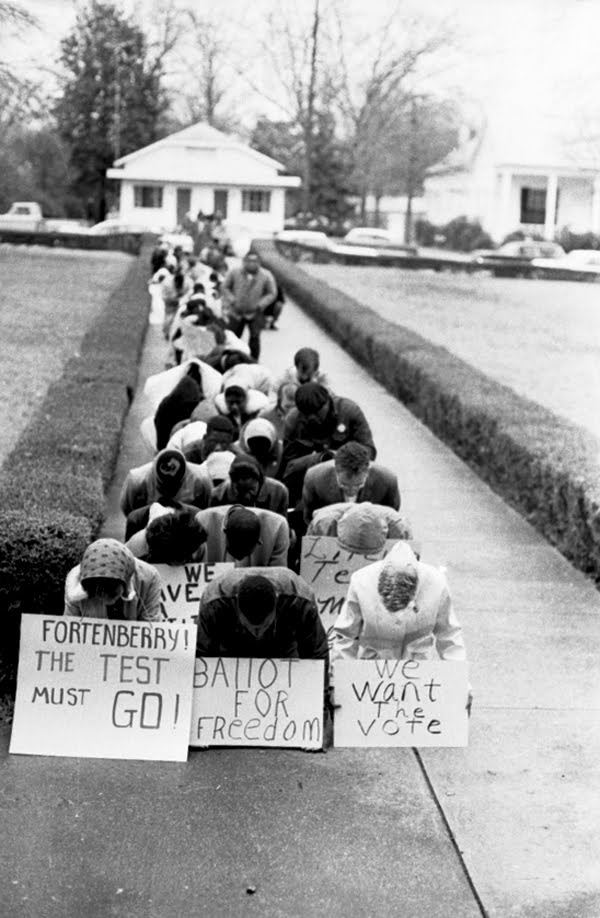
The election of Barack Obama in 2008 could not have happened without the events 44 years before in the summer of 1964. That summer, we witnessed real grassroots community organizing, as some 700 college students, from all over the country, descended on segregated Mississippi to register black voters. At the beginning of that summer, three of the organizers, Andrew Goodman, James Cheney and Michael Schwerner were hunted down and killed by the Klan. It would not be until 2005 that the perpetrators of those murders would be brought to justice. But their death was not in vain, as Freedom Summer would be a major impetus for the Vote Rights Act of 1965. Journalist Bruce Watson new book Freedom Summer: The Savage Season That Made Mississippi Burn and Made America a Democracy details the link between those events and the election of 2008.

My conversation with Bruce Watson:


Bookmark and Share

Sunday, June 6, 2010

America's economic battles


Even before the recent economic crises, the decline of America's economic hegemony had begun. The rise of China and other fast rising economies have changed the global landscape. Some of this seems inevitable. History certainly tells us that no great power stays in the same position forever. But how will this impact our standard of living, our currency, our military strength? And perhaps most importantly, should we care? If we do, then what can be done about it? These are some of the issues covered by former U.S. Trade Negotiator, and White House advisor Clyde Prestowitz in his new book The Betrayal of American Prosperity: Free Market Delusions, America's Decline, and How We Must Compete in the Post-Dollar Era.

My conversation with Clyde Prestowitz:

Bookmark and Share

Thursday, June 3, 2010

What if a gorilla walked into a room?

Is the world really as clear as what we see in front of our face? If you are sitting and watching a basketball game and a gorilla walks into the room, would you notice? What if what we see, what we believe, is but a distorted reflection of reality. What if our angle of vision is what determines our reality? This is the foundational idea of cognitive psychologist Daniel Simons, articulated in his new work The Invisible Gorilla: And Other Ways Our Intuitions Deceive Us.

My conversation with Daniel Simons:
Bookmark and Share

Wednesday, June 2, 2010

Coming of Age Between the Arabs and Israelis

Even with respect to our most benign domestic issues, it seems impossible for most people to see both sides of an issue. With respect to perhaps the world's most contentious issue, the conflict between the Israelis and the Palestinians, the ability to see both sides is near impossible and has been so for over 60 years. Journalist and historian Kai Bird has done the rare thing of not only seeing both sides, but living on both sides in the Middle East.

Kai Bird came of age amidst the Arab/Israeli conflict. He thought he fully understood the catastrophe and plight of the Palestinians until he married a Jewish woman, whose parents were holocaust survivors. In his book Crossing Mandelbaum Gate: Coming of Age Between the Arabs and Israelis, 1956-1978, he tries to make sense of the intersection of the catastrophes of two cultures, in a region that never seems to miss an opportunity to miss an opportunity.

My conversation with Kai Bird:


Bookmark and Share

Tuesday, June 1, 2010

Last Call


Over the weekend we read in the New York Times, how New York City and maybe other levels of government we're thinking of finding ways to ban or at least get us to cut back on salt consumption. It should remind us that ninety years ago government, with the willing support of vast swatches of the American people, decided that we should no longer consume alcohol and the 13th amendment was born. While prohibition certainly changed behavior, it also carried with it many, many unintended consequences. In his new book Last Call: The Rise and Fall of Prohibition, former New York Times public editor Daniel Okrent examines how a perfect storm of political and social trends lead to prohibition, what were some of those unintended consequences and why and how something similar could happen again.

My conversation with Daniel Okrent:

Secrets of the Grown-Up Brain

As we enter middle age one of the things we fear most is loosing some of our cognitive powers, as we forget names, forget where we put the keys and where we parked the car. It all seems to signal that we are on the glide path to old age. In fact science is now telling us something very different. N.Y. Times deputy science editor Barbara Strauch, in her new book The Secret Life of the Grown-up Brain: The Surprising Talents of the Middle-Aged Mind, tells us that we may be just reaching our peak of mental abilities in so many areas. It seems that something as simple as education, or working, may be the key to building and enhancing the brain for a lifetime.

My conversation with Barbara Strauch:

Bookmark and Share

Thursday, May 27, 2010

Murdoch, The Journal and the future of newspapers

While many argue that newspapers are in their twilight, one of the most dramatic corporate battles of recent years involves one of our nations great newspapers, The Wall Street Journal. Rupert Murdoch, today's answer to Charles Foster Kane, had for years coveted a major, national paper, as a crown jewel to his media empire. When he realized it was unlikely he would ever get The New York Times, he set his sights on the Journal.He captured it and would begin to transform it based on his own unique vision. What really went on in that battle and what it says about Murdoch and the future of journalism and American newspapers is the backdrop for Sarah Ellison's book War at the Wall Street Journal: Inside the Struggle To Control an American Business Empire.

My conversation with Sarah Ellison:

Bookmark and Share


Paradise Beneath Her Feet

Much of the debate and conflict in the Middle East today is cast as the battle between tradition and modernity; what's still refereed to as a "clash of civilizations." But what if looking at the world this way is precisely what is causing its problems? What if understanding the unity between tradition and modernity could, in fact, bring about a whole new paradigm for finding peace? This notion, along with the increasing empowerment of woman, is the core idea of the work being done by Isobel Coleman, of the Council on Foreign Relations and outlined in her book Paradise Beneath Her Feet: How Women Are Transforming the Middle East.

My conversation with Isobel Coleman.
Bookmark and Share


Wednesday, May 26, 2010

Power Crazy

We all want "green energy." However separating the rhetoric from the reality is not so simple. In his new book Power Hungry: The Myths of "Green" Energy and the Real Fuels of the Future, Robert Bryce gives a counter intuitive assessment of the $5 trillion per year global energy industry and what really fuels the world economy. Much to the chagrin of many, he rebukes the conventional wisdom about energy. He shows the reality that the US has built the world's largest economy by relying on hydrocarbons and we cannot and will not stop using carbon based fuels for a long time to come. He makes a compelling case that our real clean energy future must be natural gas and nuclear.

My conversation with Robert Bryce:

Bookmark and Share


Tuesday, May 25, 2010

Black Swans: The Impact of the Highly Improbable

Nassim Nicholas Taleb has redefined how we see the world. An options trader and scholar turned philosopher, he is one of the very people who predicted the financial crisis. In doing so, he devised the concept of "Black Swan Events" to describe unexpected shocks to our collective system. In his new, paperback version of The Black Swan he outlines what's still wrong with our economic system, why we are unequipped to handle the world's problems and why many of our experts, in his view, know less than cab drivers. Taleb's is an iconoclastic, provocative, idiosyncratic view of our world. But it's one we can't afford to ignore.

My conversation with Nassim Nicholas Taleb:

Bookmark and Share


Monday, May 24, 2010

Rumour of War

And when ye shall hear of wars and rumours of wars, be ye not troubled: for such things must needs be; but the end shall not be yet.
Sometimes in America, there is a desperate need for war, an atavistic desire for violence. In the 1890's there was clearly this need. Teddy Roosevelt lead the charge. He was certainly ready to go to war against Spain, but according to his letters, any nation would do. He felt the need to use war to cope with much larger changes and reaffirm to a fearful nation that it was not going soft. Sound familiar? Newsweek editor-at-large Evan Thomas, in this new book The War Lovers: Roosevelt, Lodge, Hearst, and the Rush to Empire, 1898, spent years researching what happened in the 1890's and what lessons we might learn today.

My conversation with Evan Thomas:

Bookmark and Share