Monday, October 30, 2023


On this week’s WhoWhatWhy podcast, I explore the intricate landscape of global terrorism, the Israeli-Palestinian conflict, and the geopolitical reverberations of recent events.

My guest is Kenneth Katzman, a senior adviser with The Soufan Group and a preeminent expert on the Middle East. Specializing in Iran, the Persian Gulf states, Iraq, and Afghanistan, Katzman has previously served as a senior analyst at the Congressional Research Service and an analyst at the CIA.

My conversation with Kenneth Katzman:

 To access my conversation with Ken Katzman, please go to our new Substack page By doing so, and signing up, you'll receive them directly in your email and ensure that you don't miss anything during our transition to Substack.


Monday, October 23, 2023

Navigating the New Geopolitics: A Conversation with Sam Ramani

Sam Ramani, is a distinguished Oxford scholar specializing in international relations. Ramani, also a member of London's Royal United Services Institute, brings a wealth of firsthand experience from Russia and Ukraine, as well as academic insights into Russia's military involvements in Chechnya and Syria.

Ramani describes our global politics as increasingly volatile due to the erosion of international law and the rise of a multipolar world. He views Russia's invasion of Ukraine not merely as a breach of sovereignty but as a symptom of a larger, systemic decay in international norms.

My conversation with Sam Ramani:  

To access my conversation with Sam Ramani, please go to our new Substack page By doing so, and signing up, you'll receive them directly in your email and ensure that you don't miss anything during our transition to Substack.

Tuesday, October 17, 2023

Carl Safina on Nature, Philosophy, and Unexpected Teachers

In a digital age that often alienates us from nature, ecologist and author Carl Safina offers a transformative tale in 'Alfie & Me.' Rescuing Alfie, a near-death baby screech owl, with his wife Patricia, Safina challenges conventional ideas about interspecies boundaries and our philosophical relationship with the world. Set amid the COVID-19 pandemic, the story serves as a poignant reminder that life's deepest lessons often come from unexpected sources. A MacArthur "genius" and Stony Brook professor, Safina's work illuminates the intricate tapestry of life, nature, and human experience.

My conversation with Carl Safina:


To access my conversation with Carl Safina, please go to our new Substack page By doing so, and signing up, you'll receive them directly in your email and ensure that you don't miss anything during our transition to Substack.

Sunday, October 15, 2023

Can America Survive Its Own Constitution? The Tyranny of the Minority

On this week’s WhoWhatWhy podcast, Harvard professor Daniel Ziblatt, co-author of the new book Tyranny of the Minority, takes a hard look at the institutional inertia and political extremism that is threatening the future of American democracy.

Ziblatt argues that the nation’s precarious condition is defined by two contrasting views of what George Washington called “the last great experiment for promoting human happiness”: one that aspires toward a multiracial, multicultural democracy focused on equity and inclusion, and another that leans toward authoritarianism — a dichotomy Ziblatt says is epitomized by the events of January 5 and 6.

My WhoWhatWhy conversation with Daniel Ziblatt:  

To access my conversation with Daniel Ziblatt, please go to our new Substack page By doing so, and signing up, you'll receive them directly in your email and ensure that you don't miss anything during our transition to Substack.

Saturday, October 7, 2023

The Invisible Frontlines: Israel’s Secret War Against a Nuclear Iran

Updated October 8, 2023 — The podcast below was recorded earlier this week before the horrific events in Israel and Gaza. However, while the focus of the podcast is on Israel’s efforts to halt Iran’s nuclear program, it clearly lays out what could be considered the precursor to the Hamas attack. The weakness and division within Israel, the broad effort to isolate Iran through the Abraham Accords, and attempts to establish peace between Israel and Saudi Arabia are all contributing factors.


October 6, 2023 — While Iran may not be dominating today’s headlines, its nuclear ambitions are as fervent as ever. Equally unyielding is Israel’s determination — covert or otherwise — to thwart these ambitions.

On this week’s exclusive WhoWhatWhy podcast, Yonah Jeremy Bob, a senior analyst for the Jerusalem Post and former high-ranking Israeli official, pulls back the curtain on Israel’s covert operations against Iran.

Bob’s latest book, Target Tehran, offers a rare glimpse into Israel’s multilayered strategy to counter Iran through sabotage, cyberwarfare, assassination, and secret diplomacy.

My WhoWhatWhy conversation with Yonah Jeremy Bob:

To access my conversation with Yonah Jeremy Bob, please go to our new Substack page By doing so, you'll receive them directly in your email and ensure that you don't miss anything during our transition to Substack.


Monday, September 18, 2023

When the Game Was War: The 1987-88 NBA Season: A Conversation with Rich Cohn

Teams and athletes often define more than games; they encapsulate eras and collective memories. While some teams symbolize a specific year, like the 1998 Yankees, others represent an entire era, such as the Celtics from 1960 to 1966. Rarely, individual athletes like Tiger Woods in 2000 become the face of a time period. Even rarer is a year that defines an entire league, and for the modern NBA, that was the 1987-1988 season. It was a pinnacle year featuring iconic battles and drama with legends like Magic Johnson and Michael Jordan. Today, we're joined by Rich Cohen, a New York Times bestselling author and columnist, to discuss his latest book, "When the Game was War," which delves into this unforgettable NBA season.

My conversation with Rich Cohn: 

To access my conversation with John Coates, please go to our new Substack page By doing so, you'll receive them directly in your email and ensure that you don't miss anything during our transition to Substack.

Tuesday, September 5, 2023

Power Play: How Just 12 People Control America’s Economic Destiny: A conversation with John Coates

In this WhoWhatWhy podcast, I talk with Harvard Law Professor John Coates who discusses his new book, "The Problem of Twelve," which warns against the alarming concentration of financial power in the U.S. Four index funds control 25% of the S&P 500, and along with dominant private equity firms and "too big to fail" banks, they wield outsized influence over the economy and politics. Coates argues that this lack of transparency and extreme concentration of power threatens not just the economy, but U.S. democracy itself.

To access my conversation with John Coates, please go to our new Substack page By doing so, you'll receive them directly in your email and ensure that you don't miss anything during our transition to Substack.

Saturday, August 26, 2023

Living History: A Conversation with Drew Gilpin Faust on the Pivotal Moments That Shaped Her and All of Us

As we mark the 60th Annerversay of the March on Washington, it takes us back to the issues of mid-century America.  So it's only appropraite to be joined by Drew Gilpin Faust, a Bancroft and Francis Parkman Prize winner and former Harvard president. Her memoir, "Necessary Trouble: Growing Up in Midcentury," is more than a personal story; it's a lens into the pivotal moments of the 1950s and '60s. Faust's life personifies the era's turning points, illustrating that history isn't just a collection of facts but a tapestry woven through lives lived. Her journey from racial and gendered assumptions to civil rights activism serves as a microcosm of the societal transformations that continue to shape us today.

My conversation with Drew Gilpin Faust:

Wednesday, July 26, 2023

Can Boomers Ever Age Out Gracefully? A Conversation with Dr. Rosanne Leipzig

In the 1960s, baby boomers captured the world's attention with their youthful zeal, setting the cultural tone for fifty years. Today, as they age, the spotlight has shifted to aging, reflecting our concerns about older leaders and a fondness for bygone times. The adage "60 is the new 50" is common, yet we must question the reality of modern aging. Has our progress truly allowed us to age more gracefully, and are there immutable aspects of aging? This is what Dr. Rosanne Leipzig examines in her new book "Honest Aging."


My conversation with Dr. Rosanne Leipzig:

What Sports Teach Us About Work and Life: A Conversation with Sally Jenkins

Today we idolize those who excel in nearly every sport, viewing them as heroes and role models, and they are among the highest earners in our society.

Undeniably, these individuals bring innate talents to their respective sports. However, these talents alone are insufficient. Their success hinges on what they do with their abilities—the discipline, practice, conditioning, resilience, and dedication to their sport.

The question we face today is what we can learn from their success. In all aspects of our lives, some, if not all, of the skills exhibited by these athletes are crucial. How we utilize our talents, how we 'come to play' every day, as the saying goes, can make the difference between success and failure in life.

The narratives we construct internally are what distinguish greatness from mediocrity.

These are some of the topics discussed by the great Sally Jenkins, in this podcast and in her new book, "THE RIGHT CALL

My conversation with Sally Jenkins

What We Imagine "Out There" Reflects How We See Each Other

It appears we're not alone. No one enjoys solitude, and based on yesterday's testimony, we seem to have company in the cosmos.

Science fiction has certainly presented us with a myriad of interpretations of what might exist beyond our planet. However, the individual manner in which we conceptualize the possibility of extraterrestrial life becomes a sort of Rorschach test—reflecting our worldviews, our notions of life, and our innate longing to connect with something larger than ourselves, even on an intergalactic level.

This flight of imagination is a significant element of what my guest, Jamie Green, discusses in her book, The Possibility of Life. In it, she delves into our evolving understanding of the cosmos and underscores our need to pose an even deeper question: What does it mean to be human?

My conversation with Jamie Green

Monday, July 24, 2023

Why the Fentanyl Crisis Calls for a New War On Drugs

In the latest WhoWhatWhy podcast, I talk with award-winning author Sam Quinones about the growing crisis of fentanyl in America, arguing it's transforming not just individual lives, but also affecting cities and society at large. Highlighting the impact of potent synthetic drugs like fentanyl and methamphetamine, Quinones links their widespread availability to increased mental illness, homelessness, and declining urban quality of life. He asserts that the traditional voluntary approach to addiction treatment is outdated and advocates for a fundamental rethinking of how we understand and address drug addiction. Moreover, Quinones challenges the notion of "minor" drug possession and questions the concept of "safe injection sites," given the lethal nature of today's street drugs.

Quinones, known for his award-winning books The Least of Us and Dreamland, delves into the unprecedented challenges posed by potent synthetic drugs, the exacerbating role of homelessness, and the systemic failures that have allowed the crisis to spiral out of control.


My WhoWhatWhy conversation with Sam Quinones:

Saturday, July 15, 2023

Oppenheimer is Not The First Movie About the Deveopment of the Atom Bomb...The First One Was a Bomb

Exactly 78 years ago this week, the first atomic bomb test took place in Alamogordo, New Mexico.  A scene so profound it was likened to witnessing creation. 
Our guest is Greg Mitchell, author of "The Beginning or the End", a book that explores the crossroads of science, politics, and Hollywood in the Atomic Age." revealing how an early movie about Oppenheimer became pro-bomb propaganda and shaped public perception for over 75 years. 

As Christopher Nolan's "Oppenheimer" nears release, Mitchell's insights into our nuclear past become ever more relevant as we look at the influences of government and military on the media.

My conversation with Greg Mitchell:

Wednesday, July 12, 2023

How Women Changed Journalism: A conversation with Brooke Kroeger

Today, every major news network is steered by women; Fox, NBC, MSNBC, ABC, CBS, CNN, not to mention leading papers like The Washington Post, Wall Street Journal, and even the New York Times. A scenario that would have been scoffed at just two decades ago, but now made possible thanks to the tireless efforts of countless trailblazers. Pioneers like Margaret Fuller, Nellie Bly, and Ida B. Wells paved the way for extraordinary women like Martha Gellhorn, Rachel Carson, and Joan Didion. Each of these women not only broke barriers but also shaped journalism as we know it, in a field still primarily controlled by men.

Brooke Kroeger, in her new book "Undaunted: How Women Changed American Journalism." tells the story of the relentless pursuit of truth, and the transformative power of journalism when in women's hands.

My conversation with Brooke Kroeger:

Wednesday, June 28, 2023

AI May Tell Us More About the Cosmos Than Telescopes: A Conversation with Andrew Pontzen

Unleashing the power of AI and supercomputers, we're on the brink of a cosmic revelation. The creation of galaxies in code, a feat akin to the invention of the telescope, is revolutionizing our understanding of the universe. 
Renowned cosmologist Andrew Pontzen, harnessing the might of these computational behemoths, is leading us into a new era where virtual worlds mirror reality, offering unprecedented insights into our cosmos. His book, 'The Universe in a Box,' explores how these simulations are not just pushing the boundaries of cosmology, but also transforming diverse fields from finance to disease forecasting.

My conversation with Andrew Pontzen:

Wednesday, June 21, 2023

How the Memory of the ’60s Civil Rights Era Is Being Co-Opted


Our celebration of Juneteenth is a direct result of the civil rights struggles of the 1960s. The battles led by Martin Luther King Jr. and many others created an enduring legacy on which the continued fight for civil rights rests. But what happens when this legacy is manipulated, distorted, and appropriated to further agendas far removed from the original purpose? What does it mean when various causes are labeled the “civil rights struggle of our time?” Does it dilute the impact of the original battle? When wielded in the wrong hands, could it even be seen as an affront to 50 years of civil rights progress? These questions form the central theme of my conversation today with Hajar Yazdiha.

Hajar is an assistant professor of sociology at the University of Southern California, and she has critically examined how various movements, including those on the far right, have appropriated the symbols and rhetoric of the civil rights era to advance their cause. She examines this in her new book  The Struggle for the People’s King: How Politics Transforms the Memory of the Civil Rights Movement.

My WhoWhatWhy conversation with Hajar Yazdiha:

Wednesday, June 14, 2023

Space: It’s Not Just for Governments Anymore: A conversation with Ashley Vance


The recent congressional budget battles have underscored the scarcity of public funds for space, science, and technology. This has paved the way for the private sector, a world that Ashlee Vance delves into in this week’s WhoWhatWhy podcast and in his new book, When the Heavens Went On Sale: The Misfits and Geniuses Racing to Put Space Within Reach.

My WhoWhatWhy conversation with Ashley Vance:

Thursday, May 18, 2023

Flying Green, Climate Justice, and Higher Prices

One of the great ironies of the world today is that while the problems we face, particularly with respect to climate, must, if they’re ever to be solved, bring the world closer together in seeking solutions. One of the ways that we can come together via travel or in person is also one of the supreme carbon-intensive things that we do to harm the planet.

And yet, the airline industry has committed to at least making the effort towards zero emissions by 2050. Like so much of what must save us from the ravages of climate change, technology lies at the heart of the solution. Along with it, the forces of the market, of innovators, investors, entrepreneurs, and scientists, must move with the same vision that the Wright brothers took to create the idea of flying itself.

Telling this modern story is renowned British journalist Christopher de Bellaigue, a historian, and journalist, known for his reporting and books on the Middle East and environmental and ethical issues. His latest is Flying Green: On The Frontiers of a New Aviation.  

My WhoWhatWhy conversation with Christopher de Bellaigue:


Friday, May 12, 2023

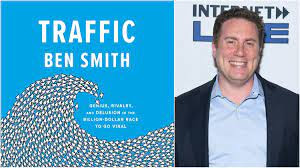
The Era of Social Media Journalism Is Over: A Conversation with Ben Smith

In the early 2000s, a significant media-business mistake emerged: the belief that website traffic is a commodity like oil, which would generate increased revenue as advertising improved. However, unlike other commodities, traffic lacked scarcity. The internet made traffic virtually infinite, posing challenges for new media-business models.

In this podcast, Ben Smith, former founding editor-in-chief of BuzzFeed, former media columnist for The New York Times, and author of Traffic: Genius, Rivalry, and Delusion in the Billion Dollar Race to Go Viral, discusses the rise and fall of new media like Gawker and BuzzFeed, the impact and consequences of megaplatforms like Facebook and Twitter, and the shifting landscape of contemporary journalism.

Smith examines the fluctuating trust in legacy news brands and the growing power of individual voices over faceless institutions, drawing parallels to developments in Hollywood, sports, and politics. Smith highlights the recent decline in both social media’s influence, and as a destination for news and information, and how this has led to more readers visiting homepages directly. He also emphasizes that conservative media outlets appear to have derived the most valuable insights from the social media era, adapting their strategies to thrive in the changing landscape.

Looking ahead, Smith suggests that journalism must help beleaguered consumers navigate the vast information landscape by providing context and a clear voice. He speculates that this may involve a return to some of the principles of print journalism — concision and an editorial perspective — while adapting to the digital era’s demands.

My conversation with Ben Smith:

A Conversation with Hernan Diaz about his Pulitzer Prize Winning Novel "Trust"

Hernan Diaz was just awarded the 2023 Pulitzer Prize for his novel, "Trust."

Last year, I had the opportunity to talk with Diaz about the book, his perspective on the Gilded Age, the persistent myths surrounding wealth, and the impact of these narratives on society as a whole. We also explored how the affluent can essentially "buy" their own reality amidst the enigmatic allure of money. Diaz's novel TRUST couldn't be more relevant to our current times. .

My conversation with Hernan Diaz: