Thursday, April 5, 2012

The Rising Cost of Youth Sports and the Toll on Today's Families

Youth sports are more than just a pastime. They are a multi-billion dollar business that begins in elementary school and continues into a college system, certainly as competitive as the pros. The movies Hoosiers, Hoop Dreams, Friday Night Lights and Lucas are just a few of the ways that popular culture has reflected our youth sports obsession. What was once a gentle diversion for kids, is today sometimes the difference between setting the stage for success or failure later in life.

Journalist and sports management Professor Mark Hyman has been looking at the issues surrounding youth sports for years and in his new book he concludes that it is clearly The Most Expensive Game in Town.

My conversation with Mark Hyman:


Click here to listen on your iphone or ipad 

Bookmark and Share

Wednesday, April 4, 2012

This is Your Brain on Emotions

We live in a world in which we praise logic and reason.  Yet to a large extent we are still ruled by our emotions. Moreover new research shows us the power of emotions and that to very real extent, we do just as well making our decisions and choices from a combination of emotion and reason. All of this relates to what we now understand about how the emotional system works, what are the genetic and biochemical components of the brain and can we define and maybe even change our emotional style?

These are the areas of cutting edge research being explored by Dr. Richard J. Davidson. Davidson has defined six emotional dimensions that reflect the discoveries of modern neuroscientific research.

My conversation with Dr. Richard J. Davidson about The Emotional Life of Your Brain.


Click here to listen on your ipad or iphone

Bookmark and Share

Tuesday, April 3, 2012

Jonah Lehrer explains How Creativity Works

George Bernard Shaw is quoted as saying, that "some men see things as they are and ask why, others dreams things that never were and ask why not." This is often quoted in a political context, but could also be said to be a central question of creativity. Where does creativity come from, how can it be stimulated, and like the uncertainty principle, if we try too hard to understand it, do we in some way alter it?  Jonah Lehrer, the author of "How we Decide" gives us a contemporary and real look at the creative process in his new book Imagine: How Creativity Works.

My conversation with Jonah Lehrer:


Click here to listen on your iphone or ipad

Bookmark and Share

Monday, April 2, 2012

The Making of The Military Industrial Complex

Last night on 60 Minutes we learned how man's reach into space has been virtually shut down over three billion dollars! While certainly this is real money, it is but a mere fraction of America's defense budget, much of which goes for waste, fraud, abuse and to satisfy the insatiable demands of the "military industrial complex."  Fifty years ago, Eisenhower warned us about it.  Today journalist William Hartung takes us inside the largest of America's ongoing military pariahs, Lockheed Martin.


Click here to listen on your iphone or ipad

Bookmark and Share

Friday, March 30, 2012

The Front Lines of China's Great Urban Migration

As all the talk, misstatement and misrepresentation about Foxconn plays out in the media, it’s worthwhile to try and really understand how the Chinese economy works and how the macro issues of China's great migration helps explains so much that we don’t understand.

Every year more than 200 millions rural peasants pour into China's cities, fueling the country's staggering growth. The obstacles they face, the opportunities that lie before them and the contributions they make are all part of the future of modern China. How this all plays out is still an open question, as China moves faster than any other nation in history from a rural to an urban economy. Michelle Dammon Loyalka, in her book Eating Bitterness: takes us inside these stories from China’s great urban migration.

My conversation with Michelle Dammon Loyalka:


Click here to listen on your iphone or ipad

Bookmark and Share

Thursday, March 29, 2012

The Epic Rivalry Between Big Business and Government.

If any movement has defined our times, it is the movement towards power in both government and business and the balance between the two. In fact the occupy movement, protesting against the rising power of business and the tea party movement, protesting the rising power of government, are indeed two sides of the very same coin. In many way this could have been predicted, as globalization and multinationals first began their rise in the 1970’s.

David Rothkopf, acclaimed author, visiting scholar at the Carnegie Endowment for International Peace and the CEO and Editor-at-large of Foreign Policy Magazine, looks at this phenomenon in his new work Power, Inc.: The Epic Rivalry Between Big Business and Government--and the Reckoning That Lies Ahead.


My conversation with David Rothkopf:


Click here to listen on your iphone or ipad

Bookmark and Share

Wednesday, March 28, 2012

The Unfinished Revolutions

A year ago it appeared as if the Arab world would be forever transformed. The Arab Spring would move like a tsunami, taking out dictators in its path. Yet as we are now beginning to see, the the removal of old regimes was just the beginning. The larger story is, as it usually is, about the morning after. What happens next and how does the Arab public gain real power, what do they do with it and will this be just a rerun of previous attempts at "revolution?"

Marc Lynch is a professor of political science at The George Washington University, where he also is the Director of the Institute for Middle East Studies. He lays out the whole contemporary crises in his new work The Arab Uprising: The Unfinished Revolutions of the New Middle East.

My conversation with Marc Lynch:


Click here to listen on your iphone or ipad

Bookmark and Share

Tuesday, March 27, 2012

Why have we made so little progress?

Sometimes it's reassuring, but often times very sad, that the strains of history repeat themselves in ways that show how little we've learned. From 1915 to 1970, the internal exodus of almost six million African Americans from the South changed the face of America. For her award winning book The Warmth of Other Suns: The Epic Story of America's Great MigrationIsabel Wilkerson interviewed more than a thousand people to tell the dramatic story of how this American journey unfolded. What happens to one the three central characters in 1945 Florida, shockingly parallels the recent killing of Trayvon Martin.

My conversation with Isabel Wilkerson:


Click here to listen on your iphone or ipad

Bookmark and Share

Tuesday, March 20, 2012

The modern plague

We live in a country where obesity and diabetes is a bigger problem than poverty. Where a staggering one in two Americans suffers from "diabesity." We are now raising the first generation of Americans that will live sicker and die younger than their parents. It is far more than prosperity and abundance that has created this. It's the choices we make. Dr. Mark Hyman, author of The Blood Sugar Solution, seeks to change those choices and take on this worldwide health epidemic.

My conversation with Dr. Mark Hyman:


Click here to listen on your iphone or ipad

Bookmark and Share

Friday, March 16, 2012

Why do we hate White Bread today?

In a culture in which everything is political, even the humble loaf of bread isn't spared. In fact going all the way back to the 19th century, bread said a lot about who you were, or who you wanted to be. Today, it's fair to say that old fashion, store bought white bread represents the lowest rung on the food chain. But why has this staple, that once symbolized the triumph of industrialization, become so contemptible. Aaron Bobrow-Strain, in his book White Bread: A Social History of the Store-Bought Loaf, gives rise to many theories.

My conversation with Aaron Bobrow-Strain:


Click here to listen on your iphone or ipad

Bookmark and Share

Wednesday, March 14, 2012

The Imperial Presidency 2.0

As Harvard law professor Jack Goldsmith states at the outset of his new book, “war and emergency invariably shift power to the Presidency. Permanent war and permanent emergency threaten to make the shift permanent.” Many believe that that 9/11 and the actions of the Bush administration, many of which were continued by the Obama administration, makes the idea of Presidential accountability impossible. But in his provocative new book Power and Constraint: The Accountable Presidency After 9/11,Goldsmith makes the contrary argument. He says that post-9/11 American Presidents are more accountable for their national security decisions than ever before.

My conversation with Jack Goldsmith:


Click here to listen on your iphone or ipad

Bookmark and Share

Monday, March 12, 2012

Old Habits Die Hard

Why is it so hard to loose weight, to quit smoking, to go the gym regularly? Much of the answer lies in the power of habits. The same forces that allow us to back out our driveway without conscious thought and to brush our teeth each day without using mental energy, also often stands in the way of our progress. This is The Power of HabitCharles Duhigg, investigative reporter for The New York Times explains "why we do what we do in life in business".

My conversation with Charles Duhigg:


Click here to listen on your iphone or ipad

Bookmark and Share

Thursday, March 8, 2012

Jack Kennedy: Elusive Hero

The playwright Arthur Laurents, in his film The Way We Were, talks about his handsome hero, saying that “in a way he was like the country he lived in; everything came too easily to him." For decades we thought the same about Jack Kennedy. He had that cool, romantic, Gatsbyesque detachment and it somehow seemed to come easily to him, as to the manor born.

Today, as a result of a beautiful and insightful new biography Jack Kennedy: Elusive Hero by Chris Matthews, we know a lot more about how that heroic Renaissance man detachment came to be. It came not from ease, but from pain, study and yes, even loneliness. The kind of pain that builds character and makes great leaders and great Presidents. In a way he was like the country we all used to live in, and less like the one we live in today.

My conversation with Chris Matthews:


Click here to listen on your iphone or ipad

Bookmark and Share

Monday, March 5, 2012

First, do no harm!

The first rule of medicine is always "do no harm." It should also be the first rule of trying to do good in the world. However, when billions were committed to fighting AIDS in Africa, perhaps that rule was broken? Just maybe mistakes were made and over the long run more harm than good was accomplished? This is the focus of a revealing new book by Craig Timberg and Daniel Halperin,Tinderbox: How the West Sparked the AIDS Epidemic and How the World Can Finally Overcome It

My conversation with Craig Timberg:


Click here to listen on your iphone or ipad

Bookmark and Share

Friday, March 2, 2012

Vampires and Angles and Werewolves, oh my!

Few writers have move as easily between genres as Anne Rice. My last conversation with her was about religion, faith and then about Angels. Now she moves into the realm of werewolves. A field already very crowded; but she still brings her own quite unique perspective. During a time of all to real dangers that face us each day, she gives us a reason to escape into another world, in her new novel The Wolf Gift.

My conversation with Anne Rice:


Click here to listen on your iphone or ipad

Bookmark and Share

Wednesday, February 29, 2012

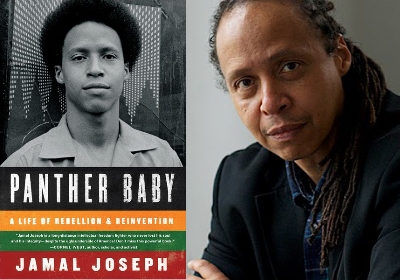
From Black Panther to convict to Oscar nominee

How's this for a resume: 

  • Joined Black Panther Party at age fifteen
  • Served eleven months in the infamous NY Rikers Island Jail
  • FBI fugitive
  • Member of Panther 21, one of the most emblematic criminal cases of the sixties
  • At sixteen, one of the youngest spokesman and leaders of the Panther's New York Chapter.  
  • Member of the Revolutionary Black Underground
  • Sentenced to twelve years in Leavenworth
  • Earned two college degrees while in Leavenworth and founded a prison theater
  • Released from Leavenworth
  • Becomes full professor and Chair of Columbia University's School of the Arts Film Program 
  • Nominated for 2008 Academy Award in Best Song category
  • Publishes memoir Panther Baby


My conversation with Jamal Joseph:


Click here to listen on your iphone or ipad

Bookmark and Share

Tuesday, February 28, 2012

Clash of cultures on the court.

Yao Ming, the Chinese basketball star said, when he first came to America, that "basketball, in America, is like a culture. For me it is like a foreigner learning a new language. It is difficult to learn foreign languages and it will also be difficult for me to learn the culture for basketball here." Pulitzer Prize winning NY Times foreign correspondent Jim Yardley proves the reverse is also true. That Chinese basketball has its own culture, its own landscape and its own unique language, just as difficult for Americans to learn.

Yardley, in his book Brave Dragons: A Chinese Basketball Team, an American Coach, and Two Cultures Clashing, take us inside the world of Chinese basketball. At a time when Linsanity is overtaking our game Yarldey gives us a whole new prospective on basketball inside a country that's been playing the game for as long as we have.

My conversation with Jim Yardley:


Click here to listen on your iphone or ipad

Bookmark and Share

Monday, February 27, 2012

They take home the Oscar, AND they are better parents!

When we think of the French we certainly think of wine, cheese, fashion, culture and this years Academy Awards. What we don't necessarily think about is parenting. We certainly didn't think that French mothers would give Tiger Mom a run for her money. Yet children do seem to behave differently in France.

Former Wall Street Journal reporter Pamela Druckerman found out first hand that French woman not only "don't get fat," they raise better behaved children. Druckerman reports from the front in her book Bringing Up Bebe: One American Mother Discovers the Wisdom of French Parenting
.
My conversation with Pam Druckerman:


Click to listen on your iphone or ipad

Bookmark and Share

Friday, February 24, 2012

What's happened to the United States Senate?

It was once referred to as "the world’s greatest deliberative body."  A body who can claim as its members, Daniel Webster, Abe Lincoln, Everett Dirksen, Ted Kennedy, Lyndon Johnson, Robert LaFollette, Robett Taft and Daniel Patrick Moynihan, just to name a few. Where once great issues like civil rights and war and peace were debated, today it’s become the epicenter of partisan gridlock. What happened and were the halcyon days really as good as we remember?  This is the world into which Ira Shapiro takes us in his book The Last Great Senate: Courage and Statesmanship in Times of Crisis.

My conversation with Ira Shapiro:


Click here to listen on your iphone or ipad

Bookmark and Share